
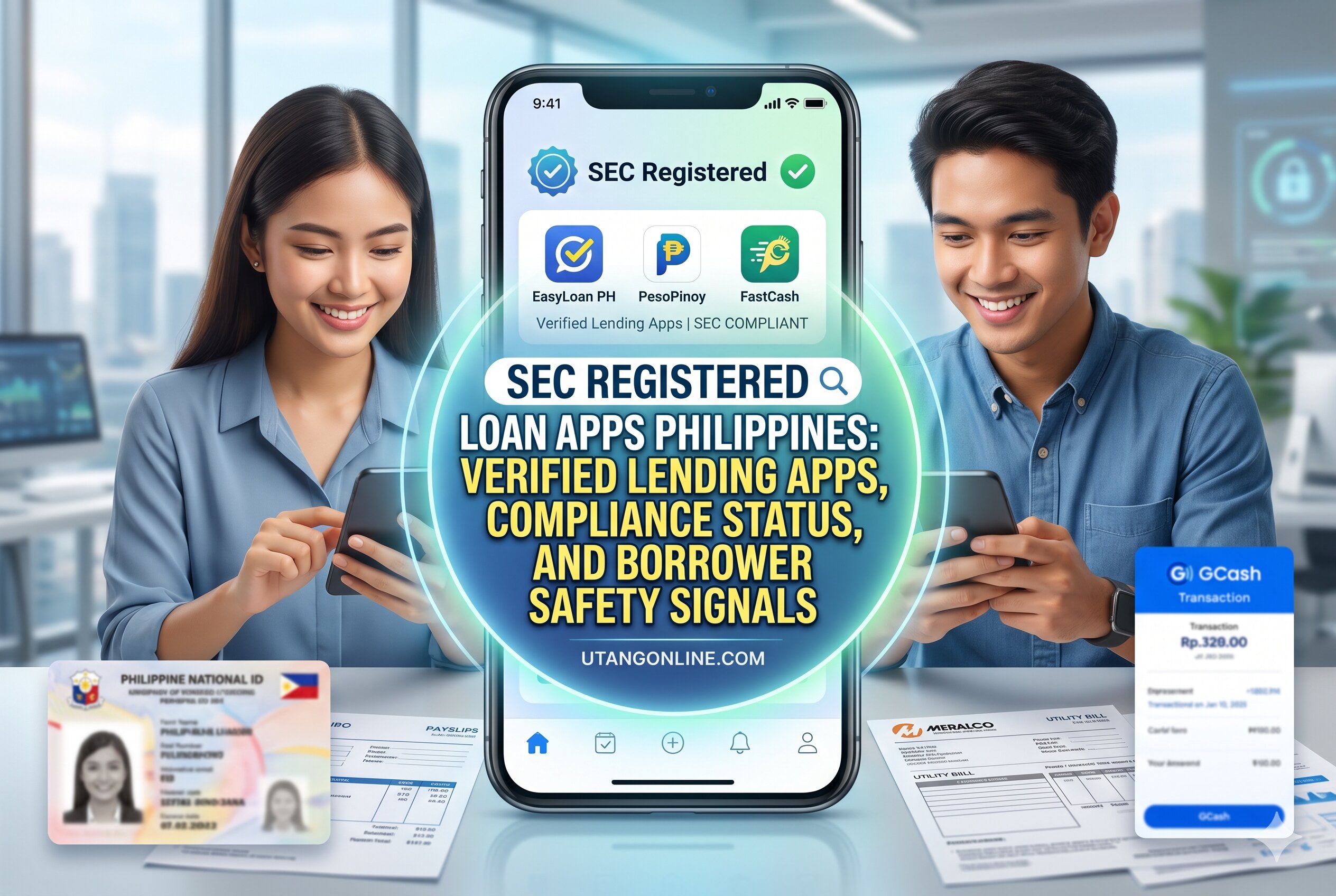
Online lending in the Philippines has grown rapidly alongside e-wallet adoption, digital banking, and app-based financial services. But as more borrowers apply through mobile apps, fake lenders, abusive collection practices, cloned applications, and misleading “instant approval” advertisements have also increased. Searching for “SEC registered loan apps Philippines” is no longer just about finding fast cash – it is about protecting personal data, avoiding harassment, and verifying whether a lending platform operates legally.
Borrowers now need to evaluate multiple trust signals before submitting an application. A legitimate app may have Securities and Exchange Commission registration, a valid Certificate of Authority to Operate, proper privacy disclosures, secure eKYC onboarding, transparent repayment terms, and compliant data permissions. At the same time, borrowers should know that SEC registration alone does not automatically guarantee ethical behavior.
Summary:
SEC registered loan apps Philippines refers to online lending platforms connected to companies registered with the Securities and Exchange Commission and authorized to operate lending activities legally. Borrowers should verify both SEC registration and lending authority, check app permissions, review complaint history, confirm privacy practices, and watch for harassment or fake collection tactics. Legitimate lenders usually implement eKYC verification, transparent disclosures, secure repayment systems, and compliant data handling aligned with Philippine regulations. Verification steps may involve checking SEC advisories, lending company records, app store status, privacy policies, and borrower complaint patterns before submitting sensitive information or linking e-wallets such as GCash or Maya.
Why SEC Registration Matters for Loan Apps in the Philippines 🛡️
The rise of digital lending changed how Filipinos access short-term financing. Employees, freelancers, online sellers, riders, delivery workers, and gig-economy earners can now apply for loans without visiting physical branches.
However, this convenience also created opportunities for illegal operators.
The Securities and Exchange Commission regulates lending and financing companies operating in the country. A company offering loans through mobile apps must generally comply with corporate registration and lending regulations before legally operating.
Borrowers often assume a mobile app listed on Google Play or the App Store is automatically legitimate. That assumption is risky.
A lending app may:
- Use fake SEC registration numbers
- Operate under another company’s identity
- Continue operations after regulatory suspension
- Use abusive collection methods
- Harvest contact lists without proper consent
- Misrepresent repayment terms
This is why borrower verification behavior matters as much as loan approval speed.
What “SEC Registered” Actually Means
Many borrowers misunderstand the phrase “SEC registered.”
SEC Registration vs Lending Authority
A company registered with the SEC simply means it exists as a legal corporation or entity. That alone does not automatically authorize it to provide loans.
A lending company usually also needs:
- Certificate of Incorporation
- Certificate of Authority to Operate as a Lending Company
- Compliance with lending disclosure rules
- Proper reporting obligations
- Data privacy compliance requirements
This distinction is critical when reading app advertisements.
A mobile app may say:
“SEC Registered”
But borrowers should still ask:
- Does it have lending authority?
- Is the company actively authorized?
- Has it received complaints or sanctions?
- Is the app still publicly available?
- Does the privacy policy appear legitimate?
This is part of properly evaluating SEC lending authority explained within the Philippine fintech ecosystem.
Why Some Apps Get Flagged by Regulators
The SEC has previously issued advisories against online lenders accused of:
- Excessive interest practices
- Harassment
- Public shaming
- Unauthorized data access
- Threatening borrowers through contact lists
- Operating without authority
Some apps were eventually removed from distribution platforms after complaints escalated.
Borrowers searching for apps removed by regulators should understand that takedowns often happen after repeated complaint patterns, not immediately after launch.
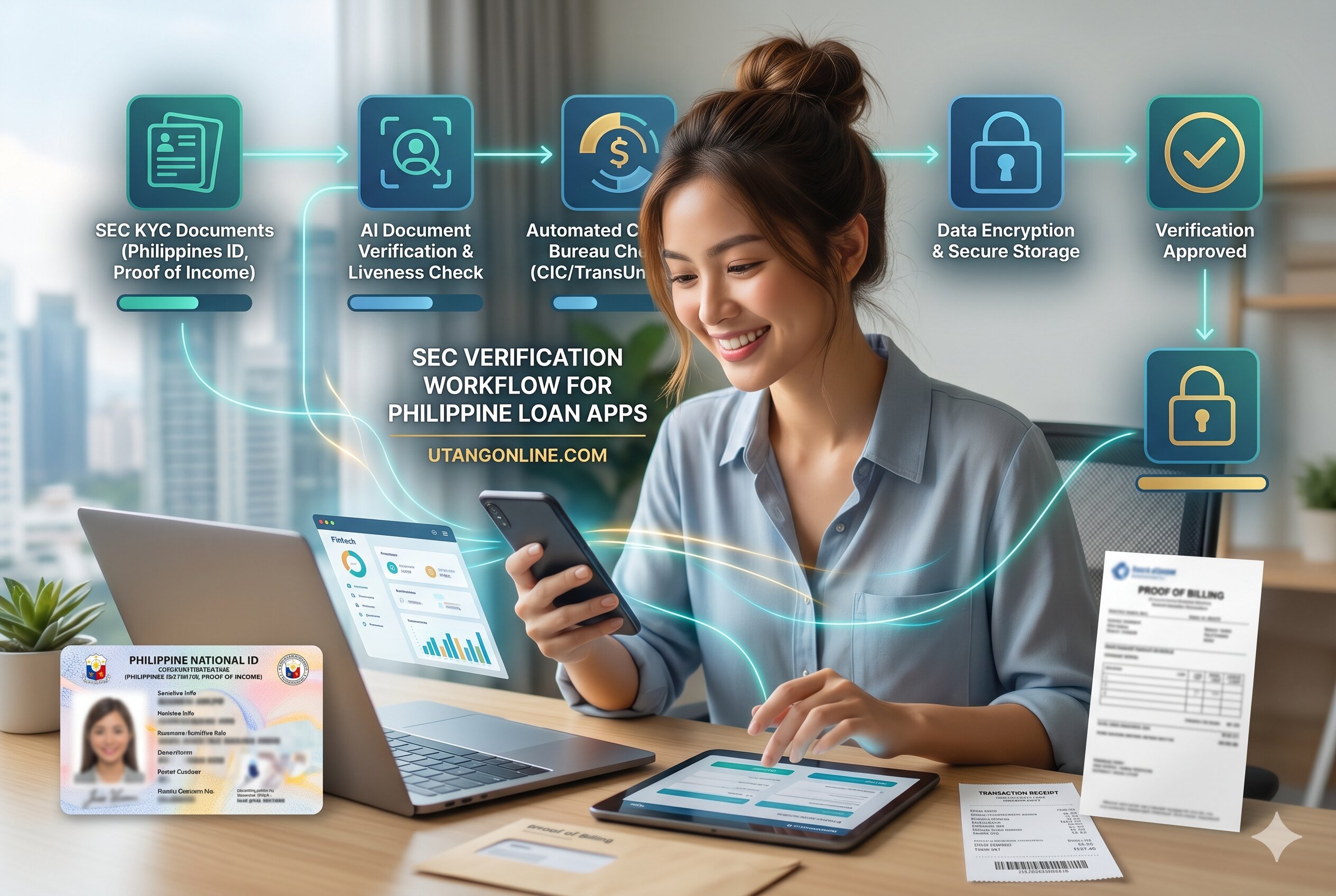
SEC Verification Workflow for Philippine Loan Apps
Flowchart showing SEC registration checks, lending authority validation, privacy compliance, and borrower safety verification for Philippine loan apps
How to Verify SEC Registered Loan Apps ✅
One of the most important borrower habits today is learning how to verify SEC registered loan apps before installing or applying.
Step 1: Check the Lending Company Name
Do not rely solely on the app name.
Many apps use marketing names different from the actual registered corporation.
Instead:
- Open the app details page
- Read the privacy policy
- Look for the legal entity name
- Verify the company behind the app
Legitimate lenders usually disclose:
- Corporate name
- SEC registration details
- Customer service channels
- Physical business address
- Terms and conditions
If the app avoids disclosing the operating company, treat that as a warning signal.
Step 2: Verify SEC Records
Borrowers should compare:
- Company name
- Registration status
- Lending authority references
- Public advisories
A legitimate lender should maintain consistency across:
- App listing
- Website
- Privacy policy
- Loan agreement
- Customer support information
Mismatch patterns often appear in suspicious apps.
Step 3: Review Data Privacy Practices
The National Privacy Commission oversees data privacy compliance.
Before applying, borrowers should check whether the app:
- Explains data collection clearly
- Limits unnecessary permissions
- States data retention practices
- Provides privacy complaint channels
- Avoids invasive contact scraping language
Apps requesting broad access to SMS, contacts, or photo galleries without clear justification deserve extra scrutiny.
Step 4: Review Borrower Complaints and Collection Behavior
Even if a lender appears registered, borrowers should evaluate operational behavior.
Key borrower complaints commonly involve:
- Threatening collection messages
- Contact harassment
- Fake legal notices
- Hidden fees
- Identity misuse fears
- Aggressive repayment reminders
This becomes especially important for first-time borrowers who may prioritize approval speed over compliance verification.
Are SEC Registered Apps Automatically Safe?
No.
This is one of the most misunderstood areas in Philippine online lending.
Registration Does Not Guarantee Ethical Operations
A company may have legal registration but still face complaints regarding:
- Collection tactics
- Transparency issues
- Customer support failures
- Privacy concerns
- Poor disclosure practices
Borrowers should treat SEC registration as a starting trust signal – not the final safety guarantee.
Stronger Borrower Safety Signals to Look For
Safer lending apps often demonstrate multiple compliance indicators together:
| Trust Signal | Why It Matters |
|---|---|
| Transparent loan breakdown | Prevents hidden fee confusion |
| Clear repayment schedules | Reduces disputes |
| Visible customer support | Indicates operational legitimacy |
| Limited app permissions | Lowers privacy risk |
| Secure eKYC onboarding | Helps identity verification |
| Proper privacy disclosures | Aligns with compliance expectations |
| Complaint response channels | Improves borrower protection |
A trustworthy lender usually behaves consistently across onboarding, repayment, collections, and customer service.
Borrower Verification Systems and eKYC Practices 📱
Modern online lending relies heavily on digital verification systems.
How eKYC Works in Philippine Loan Apps
Many legal lenders use eKYC (electronic Know Your Customer) workflows during onboarding.
This may include:
- Government ID capture
- Selfie verification
- Facial matching
- Device validation
- Mobile number authentication
- Employment or income review
- E-wallet linkage
Popular disbursement channels may include GCash and Maya because of their nationwide accessibility.
Why Legitimate Lenders Use Layered Verification
Responsible lenders do not simply approve everyone instantly.
Real underwriting systems may evaluate:
- Identity consistency
- Income indicators
- Device behavior
- Fraud risk markers
- Repayment capacity
- Existing obligations
Freelancers, online sellers, and self-employed applicants often experience different verification paths compared with salaried employees.
For example:
- Salaried applicants may submit payslips or employer data
- Freelancers may provide transaction histories
- Gig workers may show platform earnings
- Small business owners may present wallet inflows
This reflects actual risk-assessment behavior in Philippine fintech operations.
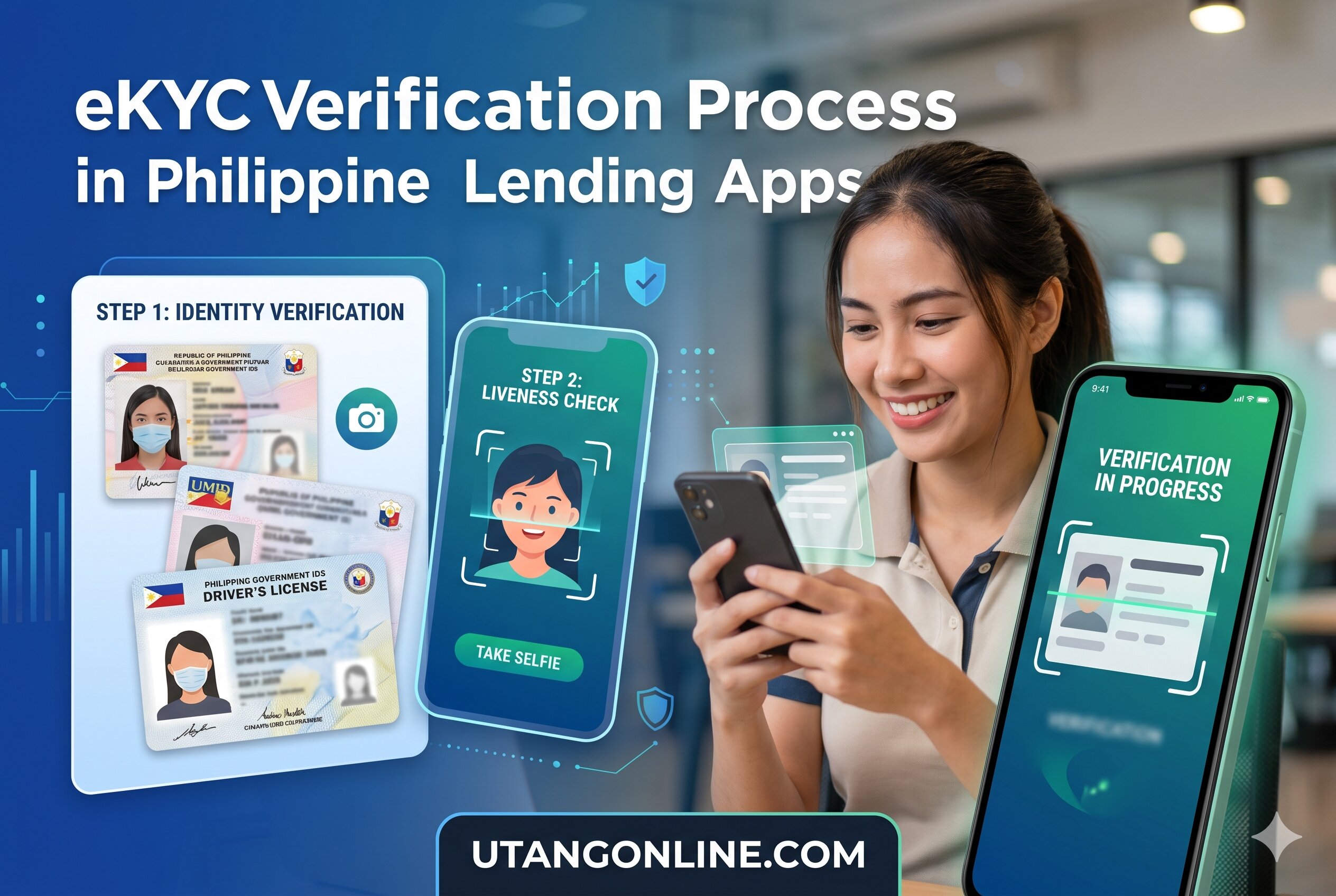
eKYC Verification Process in Philippine Lending Apps
(Mobile borrower completing selfie verification and ID validation during digital loan application in the Philippines)
Warning Signs of Fake Loan Apps 🚨
Borrowers searching for warning signs of fake loan apps should pay close attention to operational red flags.
Suspicious SMS Loan Offers
A borrower receives a message saying:
“Guaranteed loan approval in 5 minutes – no documents needed.”
This should immediately raise caution.
Scam-oriented apps often rely on:
- Mass SMS campaigns
- Unrealistic approval claims
- Pressure tactics
- Fear-based repayment threats
- Shortened suspicious links
Legitimate lenders typically provide proper disclosures before application submission.
Apps Suddenly Removed from Play Store
Some borrowers panic after noticing a loan app disappears from app stores.
Possible reasons include:
- Regulatory review
- Policy violations
- Consumer complaints
- Malware concerns
- Identity cloning issues
If an app disappears unexpectedly while demanding repayments aggressively, borrowers should verify whether the lender remains operational legally.
Excessive Permission Requests
One major borrower concern today involves contact harassment.
Apps demanding access to:
- Contacts
- Call logs
- SMS inboxes
- Photo galleries
- Microphone permissions
without reasonable explanation may expose borrowers to abuse risks.
This is why borrowers increasingly search for safe permissions for loan apps before installation.
Harassment and Public Shaming Risks
The SEC and privacy regulators have previously addressed concerns involving:
- Threatening messages
- Contact-list intimidation
- Edited photos
- Social humiliation tactics
Borrowers should know their rights before submitting sensitive personal information.
Borrower Rights Against Harassment ⚖️
Consumers have stronger protections today than many realize.
What Borrowers Should Never Tolerate
A lender should not:
- Threaten physical harm
- Publicly shame borrowers
- Send defamatory messages
- Contact unrelated people excessively
- Misrepresent legal authority
- Use fake law enforcement threats
Borrowers researching borrower rights against harassment should document:
- Screenshots
- Call logs
- SMS messages
- Collection emails
- App permission requests
Evidence matters during complaint investigations.
Complaint Channels and Regulatory Escalation
Borrowers may escalate serious concerns to relevant authorities depending on the issue type.
Examples include:
| Issue Type | Possible Regulatory Concern |
|---|---|
| Illegal operations | SEC concern |
| Data misuse | NPC concern |
| Harassment | Consumer protection concern |
| Identity misuse | Cybercrime concern |
| Fake legal threats | Fraud concern |
The Credit Information Corporation also plays a broader role in the Philippine credit ecosystem through credit data infrastructure and responsible lending visibility.
What Happens if a Lending App Violates SEC Rules?
Regulatory actions may include:
- Suspension orders
- Revocation of authority
- Public advisories
- Investigation proceedings
- App platform coordination
- Consumer warnings
This is why some apps eventually become associated with enforcement discussions or takedown histories.
However, borrowers should avoid assuming every negative review means a company is illegal. Some disputes arise from repayment misunderstandings or unmet borrower expectations.
The key is identifying patterns.
Repeated complaints involving harassment, privacy abuse, and deceptive practices deserve serious attention.
Practical Borrower Checklist Before Applying 📝
Before submitting any online loan application, borrowers should complete a structured verification process.
Identity and Legitimacy Checks
Confirm:
- Company identity
- Regulatory disclosures
- Lending authority references
- Customer support availability
- Privacy policy clarity
Financial Transparency Checks
Review:
- Interest disclosure
- Late-payment penalties
- Processing fees
- Repayment schedule
- Due-date mechanics
Data Protection Checks
Evaluate:
- Permission requests
- Contact access requirements
- Data-sharing disclosures
- Device access scope
Reputation and Operational Checks
Research:
- Complaint patterns
- Collection behavior
- App store consistency
- Public advisories
- Service responsiveness
Borrowers who spend even 15-20 minutes validating these areas often reduce significant long-term risk.
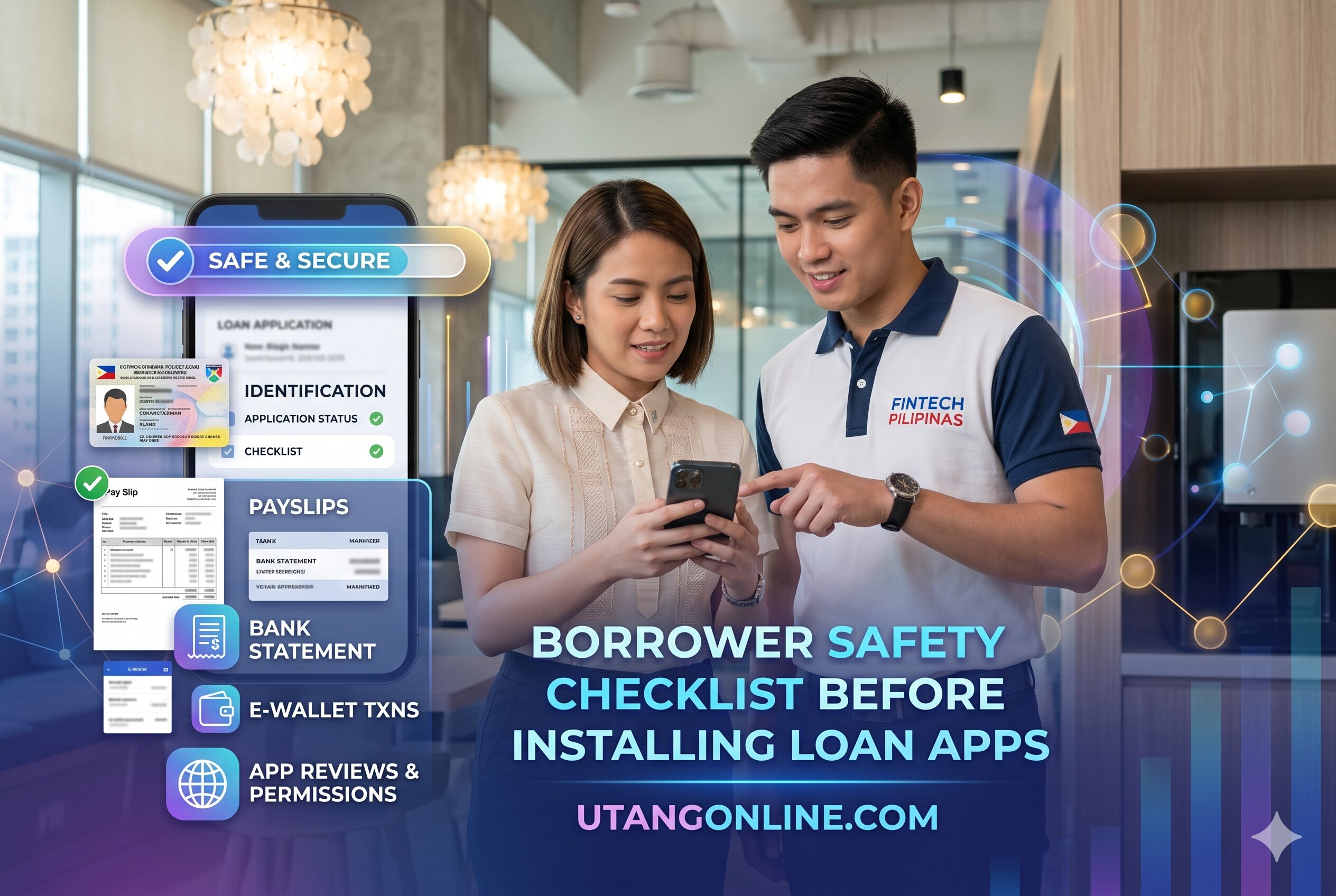
Borrower Safety Checklist Before Installing Loan Apps
(Philippine borrower reviewing SEC registration, app permissions, privacy policy, and lender legitimacy checklist before applying for a loan)
First-Time Borrowers: How Verified Apps Usually Operate
First-time borrowers often focus only on approval probability.
That approach can lead to poor decisions.
Legitimate digital lenders usually follow structured onboarding stages:
- Mobile registration
- Identity verification
- Consent disclosures
- Credit and fraud assessment
- Loan offer generation
- Digital agreement acceptance
- Wallet or bank disbursement
If an app skips disclosures entirely or pressures borrowers into immediate approval without review, caution is warranted.
Why Some Applicants Get Smaller Initial Limits
Many regulated lenders initially provide smaller loan amounts to new borrowers.
This is common risk-management behavior.
Lenders may evaluate:
- Repayment consistency
- Identity confidence
- Income stability
- Device reliability
- Fraud indicators
Responsible borrowing history often influences future eligibility more than initial application speed.
Frequently Asked Questions About SEC Registered Loan Apps
How do I check if a loan app is SEC registered?
Check the legal company name behind the app, review corporate disclosures, verify SEC-related records, confirm lending authority references, and evaluate whether the company appears in advisories or complaint discussions.
Are SEC registered apps automatically safe?
No. Registration is only one trust indicator. Borrowers should also evaluate privacy practices, collection behavior, transparency, and operational reputation.
What is the difference between SEC registration and lending authority?
SEC registration means a company legally exists as a corporate entity. Lending authority relates specifically to authorization for lending operations and compliance obligations.
Can fake apps use SEC numbers illegally?
Yes. Some fake or cloned apps may misuse registration numbers, corporate names, or misleading disclosures to appear legitimate.
What happens if a lending app violates SEC rules?
Possible outcomes include investigations, public advisories, operational suspension, revocation actions, or coordination with app platforms and regulators.
Why do legitimate loan apps request identity verification?
Identity verification helps prevent fraud, account misuse, duplicate applications, and synthetic identity activity while supporting regulatory compliance and responsible lending practices.
Should borrowers allow contact-list access?
Borrowers should be cautious about unnecessary permission requests. Access demands should be proportional, clearly disclosed, and operationally justified.
Conclusion
The search for SEC registered loan apps Philippines reflects a bigger shift in borrower behavior. Filipinos are becoming more aware of privacy risks, compliance issues, harassment concerns, and fake lending operations hidden behind polished mobile interfaces.
A legitimate loan app should demonstrate more than fast approval claims. It should show transparent disclosures, responsible onboarding practices, secure verification systems, reasonable data handling, and operational consistency across the borrower journey.
Before submitting IDs, linking e-wallets, or sharing financial information, borrowers should verify the company behind the app, evaluate trust signals carefully, and review how the lender behaves beyond marketing promises.
Responsible borrowing starts with verification awareness. The safest financial decision is often the one made after careful validation – not the fastest approval screen.
Last Updated on May 18, 2026 by Michael Reyes
