
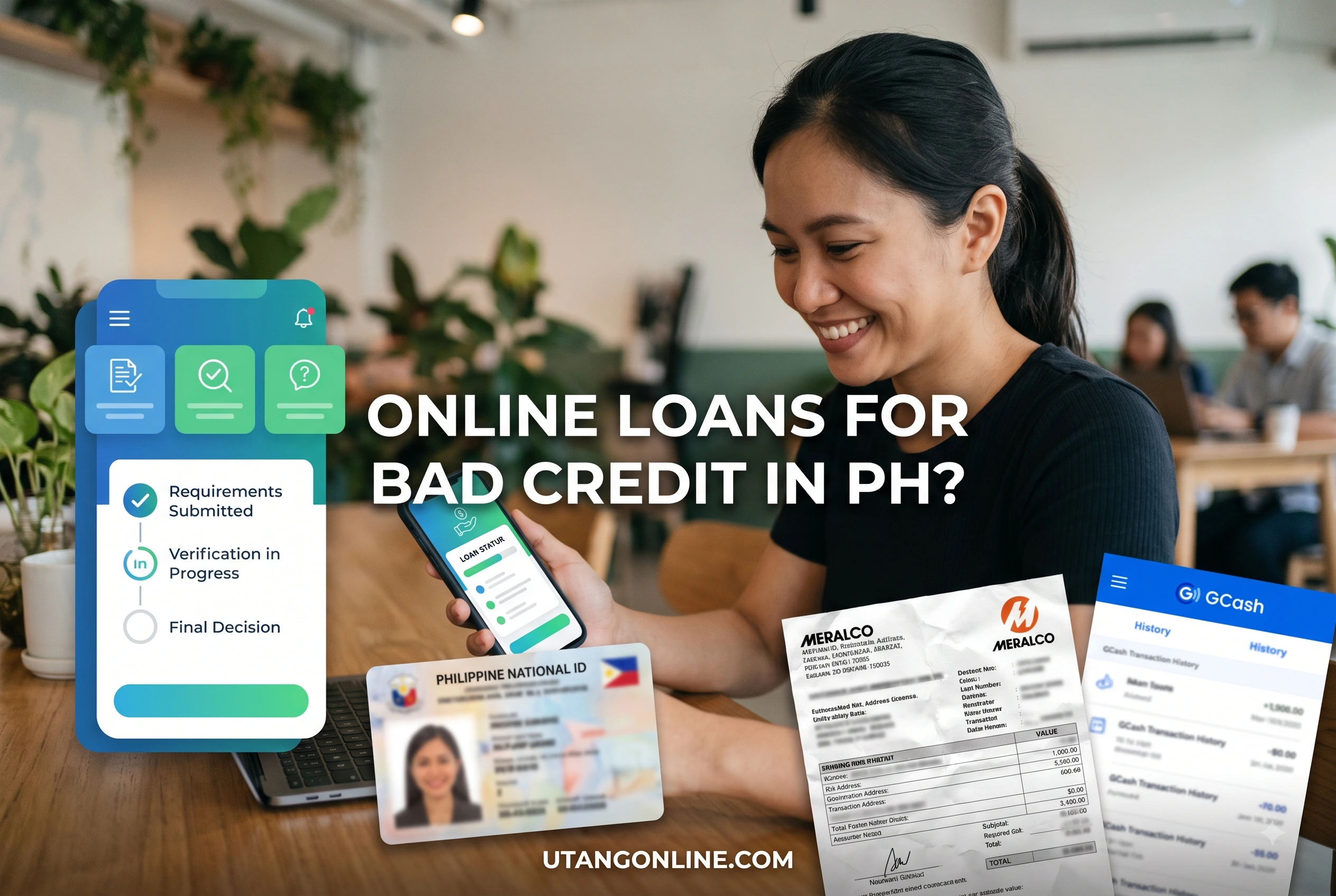
You are staring at an immediate financial emergency, but the memory of an unpaid bank credit card from three years ago is making your stomach tie into knots. You probably feel like every financial institution has permanently locked you out. Let me stop you right there: you are not going to jail for unpaid civil debts, and a past financial mistake does not mean your borrowing options are reduced to zero.
As someone who has spent the last decade analyzing the Philippine digital lending market, I have spoken to thousands of borrowers caught in this exact anxiety loop. The reality is that the financial ecosystem in 2026 has evolved massively. While traditional banks rely strictly on institutional credit scores, a new wave of legitimate fintech companies looks at entirely different data points to evaluate whether you can repay an online loan for bad credit in the Philippines.
Summary: You can still get approved for an online loan in the Philippines even with bad credit or no credit history. Digital lenders bypass traditional banking credit bureaus by analyzing your smartphone metadata, digital wallet usage, and e-commerce transaction history to assess your current ability to repay.
Key Takeaways: Traditional Banks vs. Digital Lenders
| Feature | Traditional Bank Loans | Legitimate Digital Lenders |
| Primary Approval Metric | Credit Information Corporation (CIC), TransUnion | Alternative Credit Scoring (App usage, digital wallets) |
| Past Default Impact | Immediate automatic rejection | Minimal, if current income and behavioral data are strong |
| Target Audience | Prime borrowers with formal credit history | The “credit invisible” and those with derogatory records |
| Speed of Approval | 3 to 7 banking days | 5 minutes to 24 hours |
| Interest Rates | Lower (around 1.2% to 2% per month) | Higher (Risk-based pricing, up to SEC-capped limits) |
Why Do Traditional Banks Reject My Loan Application?
To answer simply: traditional banks rely heavily on centralized credit registries like the CIC and TransUnion Philippines. If these databases show a history of defaults, the bank’s automated systems will instantly flag you as high-risk and deny the application.
When you apply for a personal loan at a major bank, their underwriting department runs a hard inquiry. They pull your record from the Credit Information Corporation (CIC), TransUnion Philippines, or CIBI Information. If you defaulted on a credit card three years ago, that derogatory record remains visible. Traditional banks operate on thin margins for personal loans, meaning they have zero tolerance for historical non-payment. They do not look at your current context; they only look at your past file.
Does an Unpaid Credit Card Debt Mean I Am Blacklisted?
No, a universal “blacklist” does not exist in the Philippines. You simply have a negative credit report with specific bureaus, which prevents traditional bank approvals but does not block fintech lenders from serving you.
Borrowers often panic, thinking their names are on a master list shared by every financial entity in the country. This is a myth. You have a derogatory record, which is a factual log of late payments or defaults. While this effectively locks you out of getting a standard auto loan or a new credit card from a major bank, the newer SEC-registered digital lenders operate outside this strict traditional framework.
How Big is the “Credit Invisible” Population in the Philippines?
More than 50% of Filipino adults remain “credit invisible,” meaning they have no formal borrowing history with registered bureaus. Fintech platforms are specifically built to serve this massive segment of the population.
If you have never taken out a formal loan, you are just as risky to a traditional bank as someone with bad credit. Banks have no way to predict your behavior. This systemic gap is exactly why alternative lenders exist. They know that millions of hardworking Filipinos—freelancers, market vendors, and gig workers—can easily pay back loans but simply lack the formal paper trail banks demand.
How Do Philippine Digital Lenders Assess Borrowers Without Checking the CIC?
Digital lenders use alternative credit scoring, leveraging behavioral data like mobile wallet transactions, e-commerce history, and utility payments to gauge your current financial stability rather than your past mistakes.
Instead of asking, “Did this person fail to pay a bank three years ago?” a fintech app asks, “Is this person regularly paying their Meralco bill via GCash today?” This is a fundamental shift in risk assessment. When you download a lending app, you are typically asked to grant specific permissions. These permissions allow the lender’s algorithm to analyze alternative data to build a real-time profile of your cash flow.
What is Alternative Credit Scoring and How Does it Work?
Alternative credit scoring is a purely algorithmic process that evaluates your digital footprint. It calculates a risk score based on how consistently you top up digital wallets, pay bills, or receive remittances.
Think of it as a behavioral assessment. The algorithm looks for signs of stability. Do you receive a regular salary transfer into your Maya or GCash account? Do you consistently pay your telecom provider on time? These platforms use artificial intelligence to spot patterns of responsible financial behavior that traditional bureaus completely ignore.
Can My Telco Usage and App Metadata Help Me Get Approved?
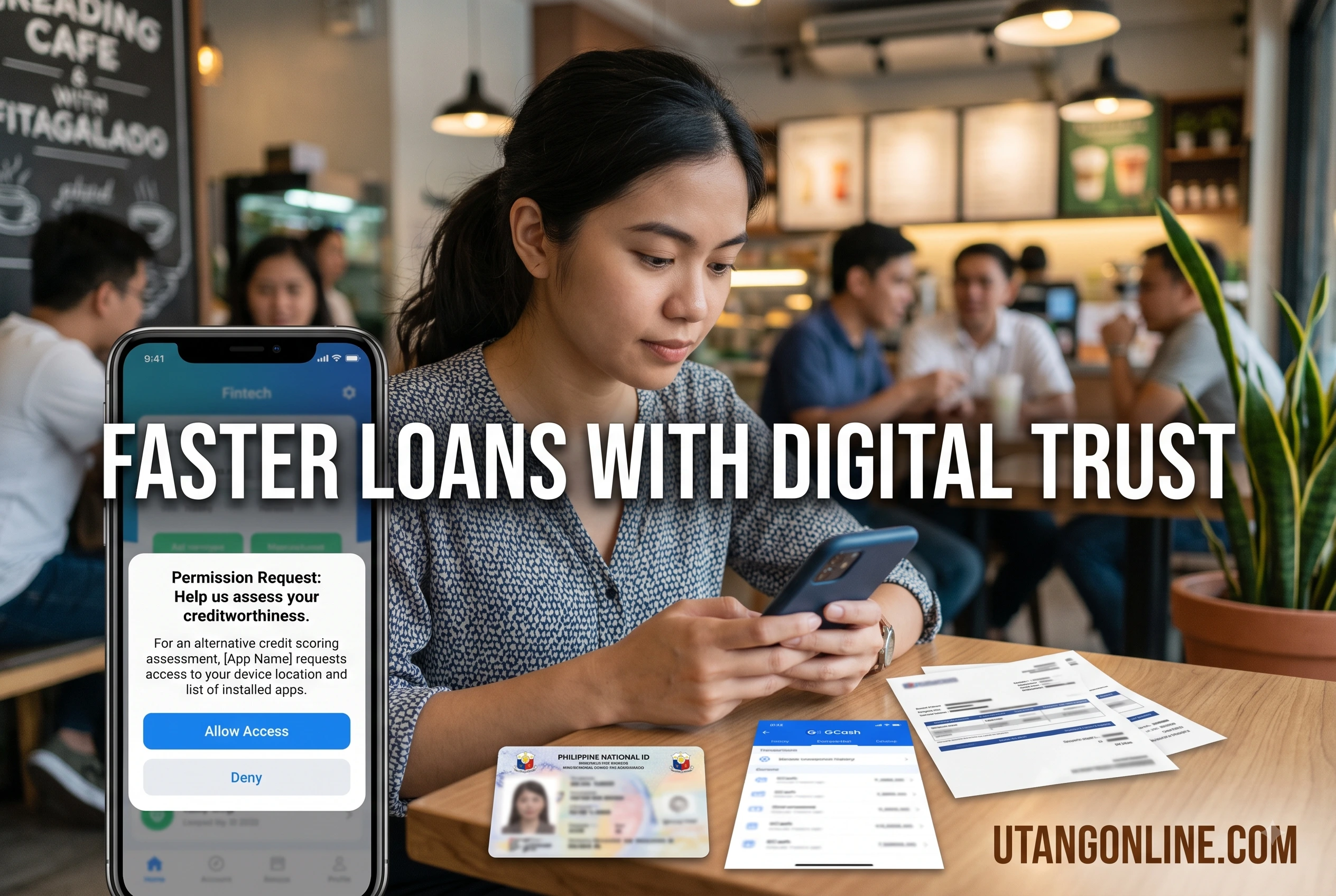
Yes. Legitimate lenders analyze smartphone metadata—such as the consistency of your mobile data top-ups and the types of financial apps installed on your phone—to verify your identity and assess your reliability.
In our experience analyzing these apps from the inside, the algorithms are remarkably sophisticated. They do not read your private text messages (which violates National Privacy Commission guidelines), but they do look at metadata. For instance, if you have owned the same prepaid SIM card for five years and load it consistently every week, the system views you as a stable, traceable individual. Conversely, a brand-new SIM card with zero history triggers high fraud alerts.
Which Online Lending Platforms Approve Bad Credit Applicants?
You must strictly look for SEC-registered online lending platforms that explicitly advertise alternative scoring methods. These platforms do not run hard inquiries on the CIC, making them accessible to those with derogatory records.
When filtering your options, your primary goal is to identify lenders that state they use internal scoring or alternative data. Apps like Tala, BillEase, and JuanHand have built massive user bases precisely because they bypass traditional banking hurdles. However, you must verify their legitimacy on the Securities and Exchange Commission (SEC) website before uploading any government IDs.
How Should Call Center Agents and Freelancers Apply?
Call center agents and gig economy workers should highlight consistent cash flows by linking their primary payroll or digital wallet accounts. Lenders prioritize steady income velocity over formal employment contracts.
Consider the scenario of a BPO agent who defaulted on a commercial bank card in 2023 due to a medical emergency, but now needs immediate cash to repair a laptop. Traditional banks will reject them instantly. However, if this agent applies through alternative platforms, the algorithm will see their regular bi-monthly salary deposits. If you are an independent contractor, seeking out specific loans for self-employed individuals usually means the lender will accept screenshots of Upwork earnings, PayPal transfers, or regular GCash receipts instead of an Income Tax Return (ITR).
What Are the Realistic Friction Points During the Application?
Expect technical friction during the eKYC (Know Your Customer) process, such as ID scanning failures or facial recognition glitches, which can delay automated approvals.
Do not assume “instant approval” means zero hassle. When our team tested several top-tier online lending platforms, we found that the automated ID scanners are highly sensitive. For example, presenting a UMID card with slightly faded edges or a glare on the plastic covering often resulted in an automatic rejection by the AI. This triggers a manual review by human staff, pushing your “instant” 5-minute disbursement to a 24- to 48-hour wait. Make sure your ID is perfectly lit, against a dark background, with zero glare when capturing the photo.
What Should I Expect Regarding Interest Rates and Fees?
Because lenders are taking on borrowers with unproven or negative credit histories, they charge significantly higher interest rates and processing fees to offset the increased risk of default.
You have to set your expectations firmly in reality. You are bypassing the strict gatekeepers of traditional finance, and that convenience comes at a premium. Digital lending is an unsecured, high-interest environment.
What is Risk-Based Pricing?
Risk-based pricing means the lender assigns higher interest rates to borrowers they deem more likely to default. If you have bad credit, you will be offered smaller loan amounts at the highest legal interest brackets.
If a bank charges 1.5% monthly for a prime borrower, a digital lender might charge 5% to 8% monthly for a high-risk borrower. Furthermore, your first loan will almost certainly be small—often between PHP 1,000 to PHP 3,000. The lender is testing you. Once you pay back this micro-loan on time, your internal trust score increases, unlocking higher limits and slightly better rates for your next transaction.
How Can I Avoid Predatory Lenders and Harassment?
Only borrow from apps listed on the SEC’s official roster of registered lending companies. Unregistered apps often resort to illegal, humiliating debt collection practices like texting your phone contacts.
Your anxiety about past debt makes you vulnerable to predatory operators. Illegal lenders, often called “shark apps,” will approve anyone instantly without proper checks. However, they steal your contact list and will text your boss, your family, and your friends if you are even one day late on a payment. Legitimate apps adhere to strict DTI and SEC debt collection guidelines. If an app asks for permission to “access contacts” instead of just “identity verification,” cancel the installation immediately.
Protecting Yourself While Rebuilding Your Financial Identity
Getting an online loan with bad credit in the Philippines is entirely possible because the market has adapted to how Filipinos actually live and spend. Alternative credit scoring is a lifeline for those locked out by traditional banks, offering a chance to secure emergency funds based on present behavior rather than past mistakes.
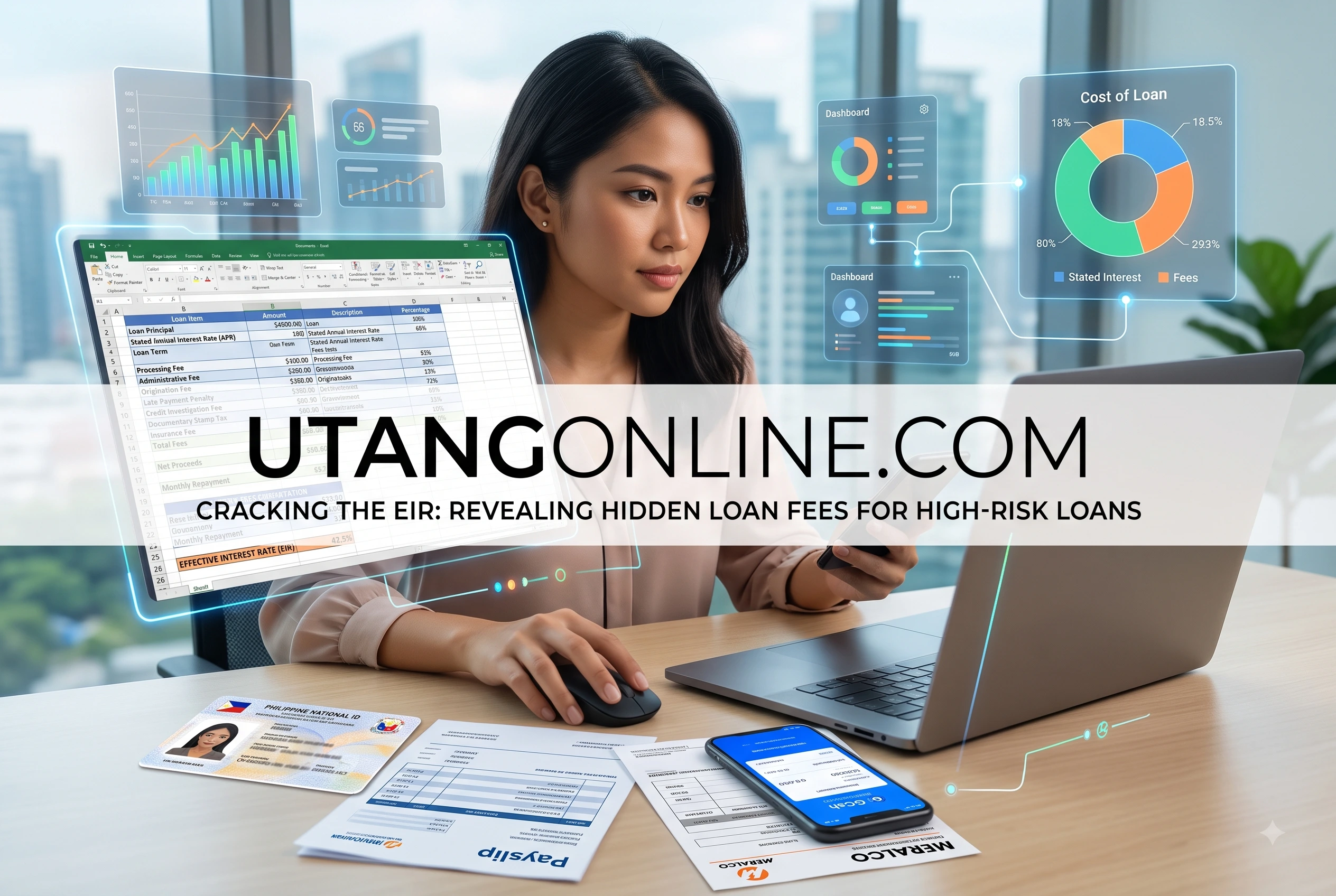
However, you must treat this access with immense caution. High-interest unsecured lending is a tool for true emergencies, not for lifestyle maintenance. Always verify the lender’s legal standing with the SEC, read the actual Effective Interest Rate (EIR) before clicking accept, and borrow strictly what you can repay within your next billing cycle. By consistently paying off these alternative loans, you slowly rebuild a positive digital financial footprint.
References
- Bangko Sentral ng PilipinasOrganization: BSPResource: Financial Inclusion Initiatives and Alternative DataURL: https://www.bsp.gov.ph/SitePages/InclusiveFinance/InclusiveFinance.aspx
- Securities and Exchange Commission PhilippinesOrganization: SECResource: List of Registered Lending Companies and Financing CompaniesURL: https://www.sec.gov.ph/lending-companies-and-financing-companies-2/list-of-registered-entities/
- National Privacy CommissionOrganization: NPCResource: Guidelines on Processing of Personal Data for Loan AppsURL: https://www.privacy.gov.ph/advisories/
Last Updated on August 14, 2026 by Michael Reyes
