
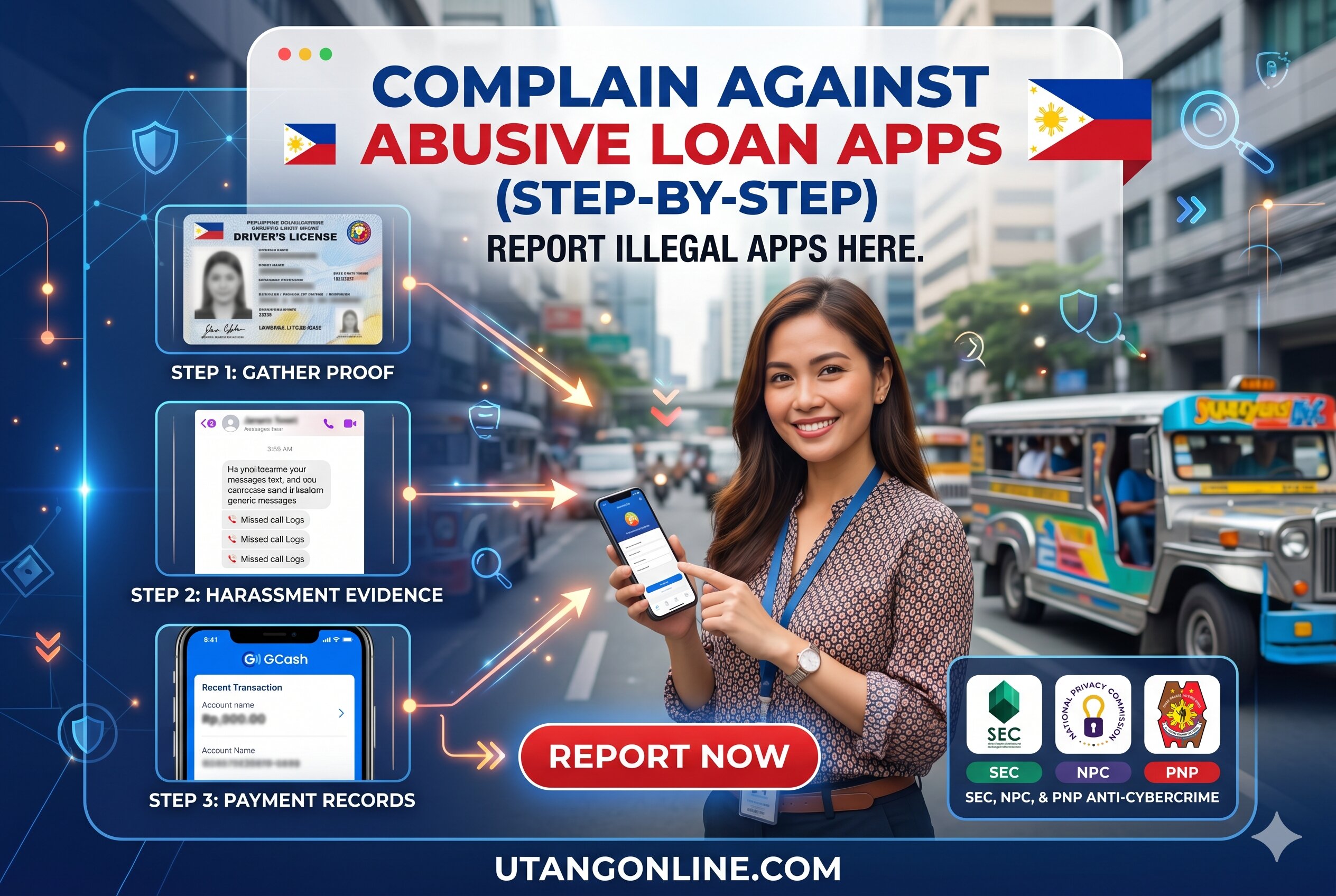
Many borrowers in the Philippines only realize a loan app is abusive after harassment begins. Some lenders send threats to contact lists, post borrower photos online, demand illegal extension fees, or continue collecting even after payment. Others operate without proper authorization while pretending to be legitimate fintech companies.
If you need to report illegal loan apps in the Philippines, the correct approach depends on the violation involved. Complaints may go to the National Privacy Commission (NPC) for privacy abuse, the Securities and Exchange Commission (SEC) for unauthorized lending activity, cybercrime units for threats or extortion, or app marketplaces like Google Play for platform violations.
This article explains:
- Which agency handles which type of complaint
- What screenshots and evidence you should save
- How to escalate harassment complaints properly
- What borrowers can realistically expect after filing
- How Philippine regulators evaluate abusive digital lending practices
Summary:
To report illegal loan apps in the Philippines, borrowers should first collect evidence such as screenshots of threats, payment records, app permissions, text messages, and collector identities. Complaints involving harassment, public shaming, or contact-list access should be filed with the National Privacy Commission. Unauthorized lenders and fake financing companies can be reported to the Securities and Exchange Commission. Threats, extortion, or cyber harassment may also be escalated to CIDG cybercrime units or local police. Borrowers can additionally report abusive apps through the Google Play reporting system to help trigger platform review and possible app removal.
Why Reporting Illegal Loan Apps Matters ⚠️
Illegal digital lenders rely on fear, shame, and borrower silence. Many abusive operators assume users will not escalate complaints formally. In practice, regulators in the Philippines often build enforcement cases using multiple borrower reports collected over time.
This matters because many abusive lenders follow recurring patterns:
- Excessive contact permissions
- Harassment through SMS blasts
- Threats sent to employers or relatives
- Fake legal notices
- Collection agents using personal social media accounts
- Unauthorized data sharing
- Repeated refinancing traps
- Fake “processing fees” before release
Several lending apps have already become part of investigations involving privacy violations, unauthorized collection tactics, or registration issues. Borrowers researching apps removed by regulators often find that many enforcement actions started with formal complaints from affected users.
If you suspect a lender is impersonating a legitimate company, it is also useful to review patterns linked to fake SEC registered loan apps and verify whether the company actually holds lending authority.
Which Government Agency Should You Contact?
One of the biggest mistakes borrowers make is filing complaints with the wrong office. Different regulators handle different violations.
SEC Handles Unauthorized Lending Activity
The Securities and Exchange Commission investigates lending companies operating without proper authority or violating lending regulations.
You should consider filing with the SEC if:
- The app claims to be licensed but cannot provide valid company details
- The lender operates without a Certificate of Authority
- The company uses misleading business claims
- Collection behavior appears abusive or deceptive
- The lender refuses to identify its registered company
Borrowers searching for legitimate lenders often compare platforms against lists of SEC registered loan apps Philippines before applying.
NPC Handles Privacy Violations and Data Abuse
The National Privacy Commission handles complaints involving unauthorized data access, contact-list harvesting, and privacy abuse.
File with the NPC if the app:
- Accessed your contacts without valid necessity
- Sent messages to relatives or coworkers
- Publicly exposed your debt status
- Used your photos for humiliation tactics
- Continued processing personal data after account closure
Many abusive lenders rely heavily on invasive permissions. Borrowers facing this issue should also learn more about borrower harassment rights tied to digital privacy protections.
CIDG and Cybercrime Units Handle Threats or Extortion
The Criminal Investigation and Detection Group and related cybercrime units may handle:
- Death threats
- Blackmail
- Sextortion
- Fake criminal accusations
- Identity misuse
- Extortion demands
- Threatening social media posts
If collectors threaten physical harm or criminal prosecution without basis, preserve evidence immediately.
Google Play Reporting System Handles Platform Violations
The Google Play Store reporting process can help flag:
- Apps engaging in harassment
- Fake lending services
- Privacy-invasive behavior
- Apps impersonating licensed lenders
- Apps violating financial services policies
Although platform reports do not replace government complaints, repeated reports can contribute to app suspension or removal reviews.
Quick Complaint Routing Table 📌
| Problem You Experienced | Best Reporting Channel |
|---|---|
| Contact-list harassment | National Privacy Commission |
| Fake SEC registration claims | Securities and Exchange Commission |
| Threats or extortion | CIDG / cybercrime units |
| Spam calls and abusive collectors | NPC + SEC |
| Fake processing fee scam | SEC + police |
| App policy violations | Google Play reporting system |
| Public humiliation online | NPC + cybercrime authorities |
| Identity misuse | NPC + CIDG |
Step 1: Preserve Evidence Before Deleting Anything 📱
Many borrowers panic and uninstall the app immediately. Unfortunately, deleting evidence too early can weaken your complaint.
Screenshots You Should Save
Capture:
- Loan contract terms
- Repayment schedules
- Threat messages
- Call logs
- Collection chats
- Social media threats
- Public posts mentioning your name
- Payment confirmations
- E-wallet transaction records
- Contact permission requests
- Collector phone numbers
Also save:
- App Store screenshots
- Company profile pages
- Interest rate displays
- Collection deadlines
Save Evidence Chronologically
Organize evidence by date:
- Loan application
- Approval notice
- Disbursement
- Due date reminders
- Harassment escalation
- Threats or public exposure
- Payment disputes
This structure helps regulators evaluate patterns more efficiently.
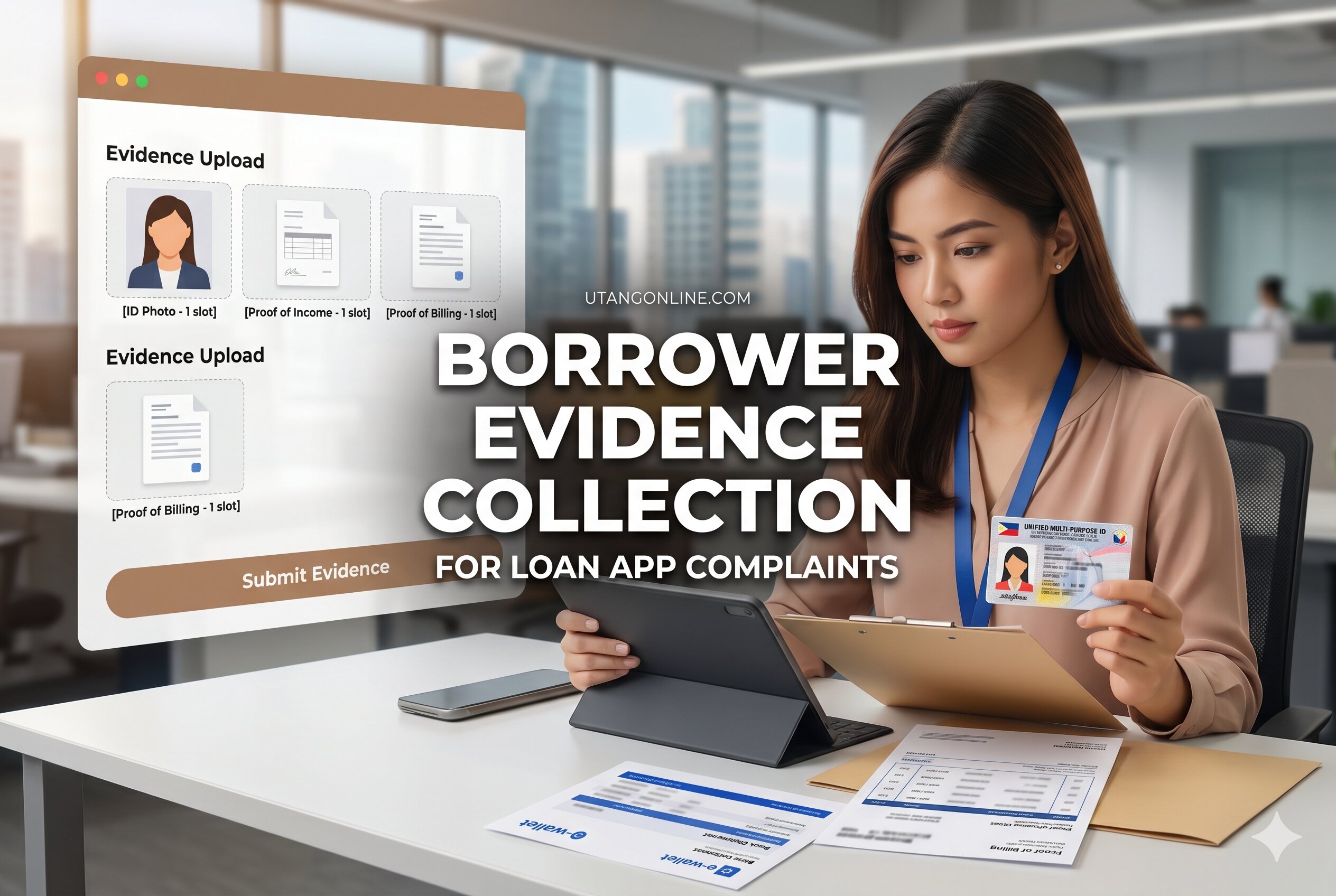
Borrower Evidence Collection for Loan App Complaints
(Philippine borrower saving screenshots, messages, payment receipts, and harassment evidence from abusive loan app)
Step 2: Verify Whether the Lender Is Legitimate
Before filing, identify whether the company is:
- SEC-registered only
- Authorized to lend
- Completely unregistered
- Using another company’s identity
Many borrowers confuse SEC company registration with lending authority. A company may exist legally yet still lack authorization to operate a lending platform.
Warning Signs of Fake or Illegal Lenders
Common red flags include:
- No company address
- No Certificate of Authority reference
- Collectors refusing to identify the company
- Pressure to pay through personal accounts
- Demands for advance release fees
- Extremely short repayment cycles
- Threats immediately after due dates
- Apps requesting unnecessary permissions
Illegal lenders frequently target:
- Freelancers
- Gig workers
- First-time borrowers
- Users with rejected bank applications
- People relying on e-wallet ecosystems
Because many digital lenders use automated risk scoring, vulnerable borrowers are often pushed toward aggressive refinancing cycles.
Check App Marketplace Details Carefully
Review:
- Publisher identity
- Number of downloads
- User complaints
- Update history
- Privacy disclosures
- Reported permission access
Apps using vague publisher names or inconsistent company identities deserve extra caution.
Step 3: File the Appropriate Complaint
How to File a Complaint With the SEC
Prepare:
- App name
- Company name
- Screenshots
- Loan terms
- Payment records
- Harassment evidence
- Collector information
Your complaint should clearly explain:
- What happened
- When it happened
- Which actions were abusive
- Whether the company identified itself properly
Keep explanations factual and chronological.
How to File a Complaint With the NPC
Privacy complaints become stronger when supported by:
- Screenshots of contact-list access
- Harassment sent to third parties
- Proof of public disclosure
- Messages containing personal information
The NPC usually evaluates whether:
- Data collection was excessive
- Consent was properly obtained
- Data sharing exceeded legitimate purposes
- Borrower privacy rights were violated
Apps that scrape contacts and pressure borrowers socially often attract serious privacy concerns.
How to Escalate Threats to Cybercrime Units
If threats involve:
- Violence
- Blackmail
- Sexual harassment
- Identity abuse
- Fake criminal allegations
Document:
- Usernames
- Phone numbers
- Email addresses
- Social media profiles
- Payment accounts used
Do not engage emotionally with threatening collectors. Responses should remain limited and evidence-focused.
Step 4: Report the App on Google Play
The Google Play reporting system allows users to flag abusive financial apps.
What Violations Should Be Reported?
Examples include:
- Harassment
- Impersonation
- Fraudulent claims
- Misleading lending practices
- Privacy abuse
- Spam behavior
Repeated borrower complaints may contribute to platform review activity.
Why Platform Reports Matter
Even if regulators are still evaluating complaints, app stores may independently review:
- Permission abuse
- Fake company identities
- Financial services violations
- Harassment reports
This creates additional pressure on abusive operators.
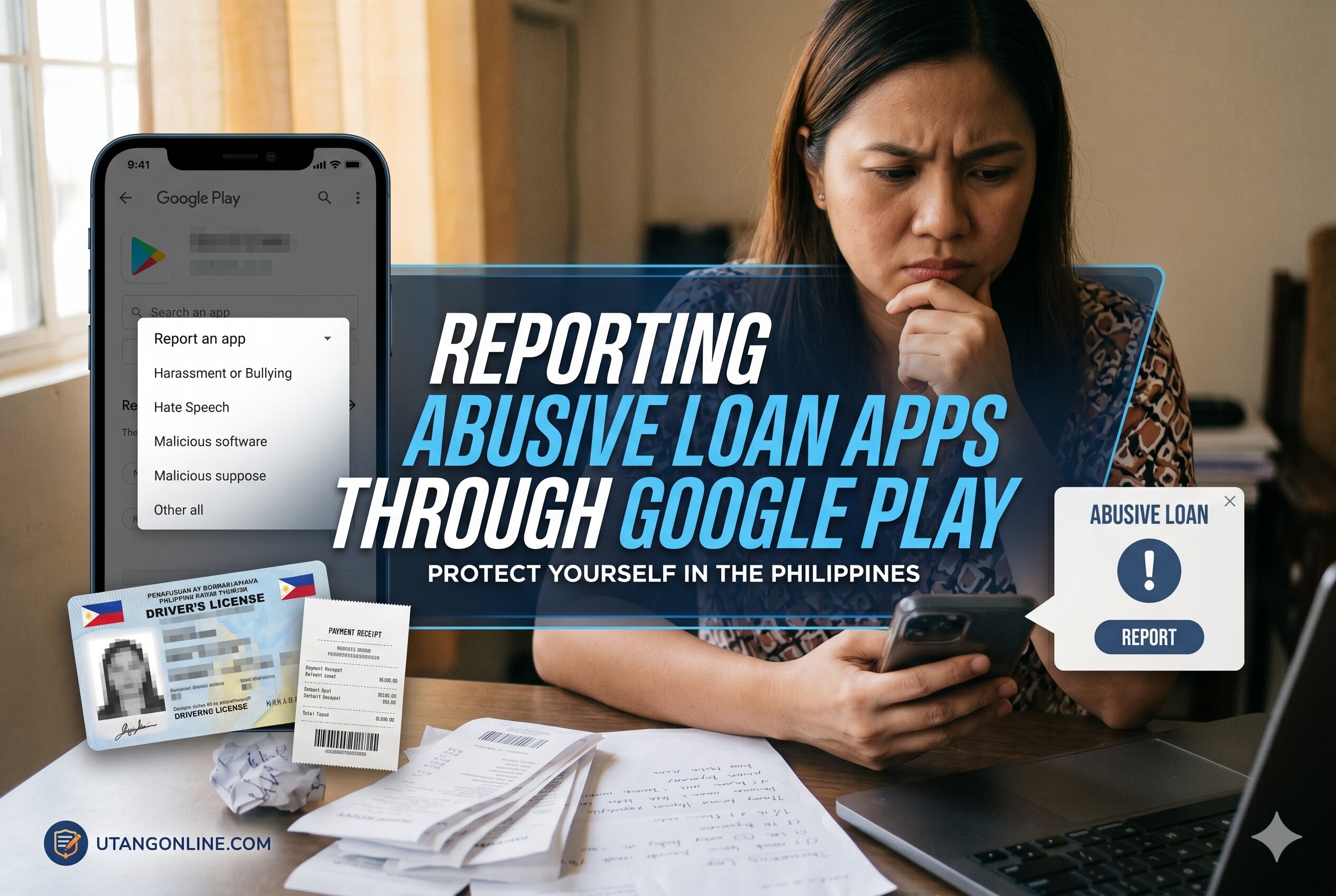
Reporting Abusive Loan Apps Through Google Play
(Android user reporting illegal loan app on Google Play after harassment and privacy abuse)
What Borrowers Often Experience Before Filing Complaints
Many users delay reporting because they fear:
- Public humiliation
- Employer exposure
- Credit damage
- Endless harassment
- Legal threats
In reality, abusive collectors frequently rely on intimidation rather than legitimate legal enforcement.
Public Threat Campaigns
Some collectors:
- Send edited photos
- Blast SMS messages
- Tag relatives online
- Threaten barangay complaints
- Claim borrowers will be jailed immediately
Debt alone is generally not grounds for imprisonment in ordinary consumer lending disputes.
Fake Processing Fee Demands
Another common pattern involves:
- “Verification fees”
- “Insurance fees”
- “Activation charges”
- “Penalty unlocking”
Legitimate lenders usually disclose all charges clearly before disbursement.
Harassment After Partial Payment
Borrowers who partially repay may still experience:
- Continuous calls
- Threat escalation
- Pressure to refinance
- Manipulative repayment demands
Keep all payment receipts. Many disputes become harder to resolve when borrowers cannot prove transaction history.
Can You Report Loan Apps Anonymously?
In some situations, yes — especially when reporting through app marketplaces or submitting tips.
However, formal investigations become stronger when regulators can:
- Verify your identity
- Review evidence directly
- Request clarifications
- Match reports with other complaints
When Borrowers Prefer Confidentiality
Some borrowers avoid public complaints because:
- Employers were contacted
- Family members became involved
- Personal photos were leaked
- They fear retaliation
If safety risks exist, mention them clearly during the complaint process.
Will Philippine Regulators Actually Respond?
Borrowers often assume complaints disappear into government inboxes. In practice, response timelines vary depending on:
- Evidence quality
- Volume of complaints
- Severity of violations
- Jurisdiction issues
- Ongoing investigations
What Regulators Usually Do First
Common initial actions include:
- Logging complaints
- Requesting additional documents
- Matching complaints against existing cases
- Reviewing company registration status
- Assessing data privacy violations
What Borrowers Should Realistically Expect
Regulatory action may not be immediate. However:
- Complaints contribute to enforcement records
- Multiple complaints strengthen investigations
- Apps may later face suspension or review
- Platform removals sometimes follow repeated reports
This is why documenting abusive behavior carefully matters.
Practical Tips Before Filing a Complaint 🛡️
Avoid Emotional Exchanges
Collectors often attempt to provoke reactions that can later be manipulated.
Instead:
- Keep conversations short
- Save evidence
- Avoid admitting facts you cannot verify
- Request company identification calmly
Protect Your Accounts
Change passwords for:
- E-wallets
- Email accounts
- Social media
- Banking apps
Especially if the app requested excessive permissions.
Review Device Permissions
Check whether the app accessed:
- Contacts
- Photos
- SMS
- Call logs
- Microphone
- Location
Remove permissions immediately after preserving evidence.
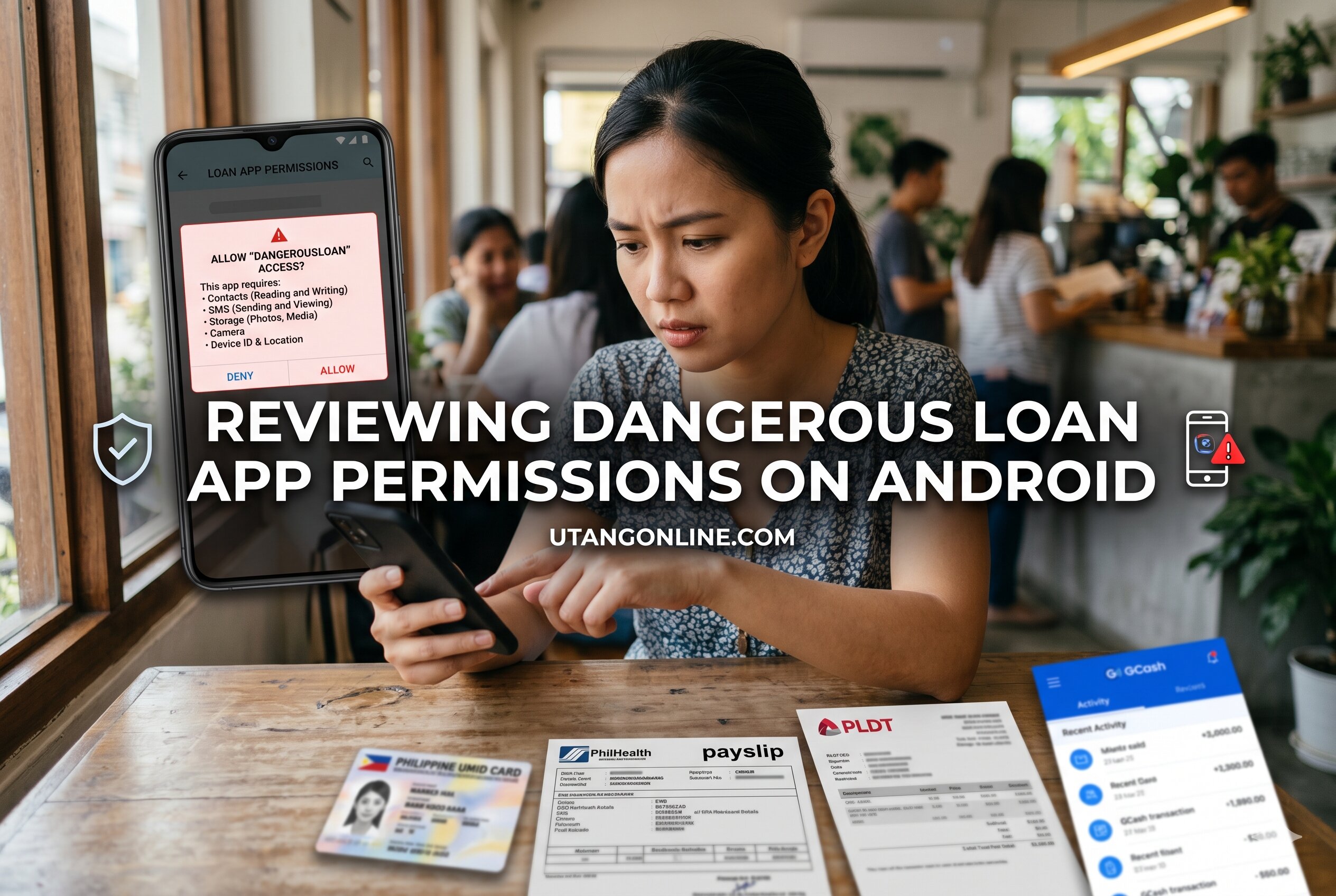
Reviewing Dangerous Loan App Permissions on Android
(Philippine borrower checking smartphone permissions after abusive lending app accessed contacts and messages)
FAQs About Reporting Illegal Loan Apps in the Philippines
Where do I report abusive lenders in the Philippines?
You can report abusive loan apps to the Securities and Exchange Commission, National Privacy Commission, CIDG cybercrime units, local police, and app marketplace reporting systems depending on the violation involved.
Can I report fake loan apps anonymously?
Some reporting channels allow anonymous tips, but formal complaints with evidence are usually stronger and more actionable.
What screenshots should I save before uninstalling the app?
Save:
- Threat messages
- Payment records
- App permissions
- Loan contracts
- Collector identities
- Public posts
- Call logs
- Transaction receipts
Will regulators remove the app immediately?
Not always. Enforcement reviews take time, but repeated complaints can contribute to investigations, app reviews, and future removals.
Can collectors legally contact my relatives?
Collectors generally should not harass unrelated third parties or publicly shame borrowers. Excessive disclosure of personal debt information may raise privacy concerns.
Should I pay collectors demanding extra release fees?
Be cautious with advance payment demands, especially when lenders require additional fees before releasing funds or resolving disputes.
Why Evidence Quality Matters More Than Complaint Volume
One detailed complaint with organized evidence often becomes more useful than multiple emotional reports lacking documentation.
Strong complaints typically include:
- Timeline summaries
- Clear screenshots
- Exact collector details
- Payment proof
- App information
- Dates and times
Borrowers who preserve evidence early are usually better positioned when regulators request follow-up information.
Conclusion
Illegal and abusive loan apps continue to exploit borrowers through intimidation, privacy abuse, fake collection tactics, and misleading lending practices. Filing a formal complaint helps create enforcement records that regulators can use to investigate repeat offenders and unsafe lending operations.
If you need to report illegal loan apps in the Philippines, start by preserving evidence carefully, identifying the nature of the violation, and routing your complaint to the correct agency. Privacy abuse should go to the National Privacy Commission, unauthorized lending concerns to the Securities and Exchange Commission, and threats or extortion to cybercrime authorities.
Borrow responsibly, review app permissions carefully, verify lender legitimacy before applying, and keep complete payment records whenever using digital lending platforms.
Last Updated on May 18, 2026 by Michael Reyes
