
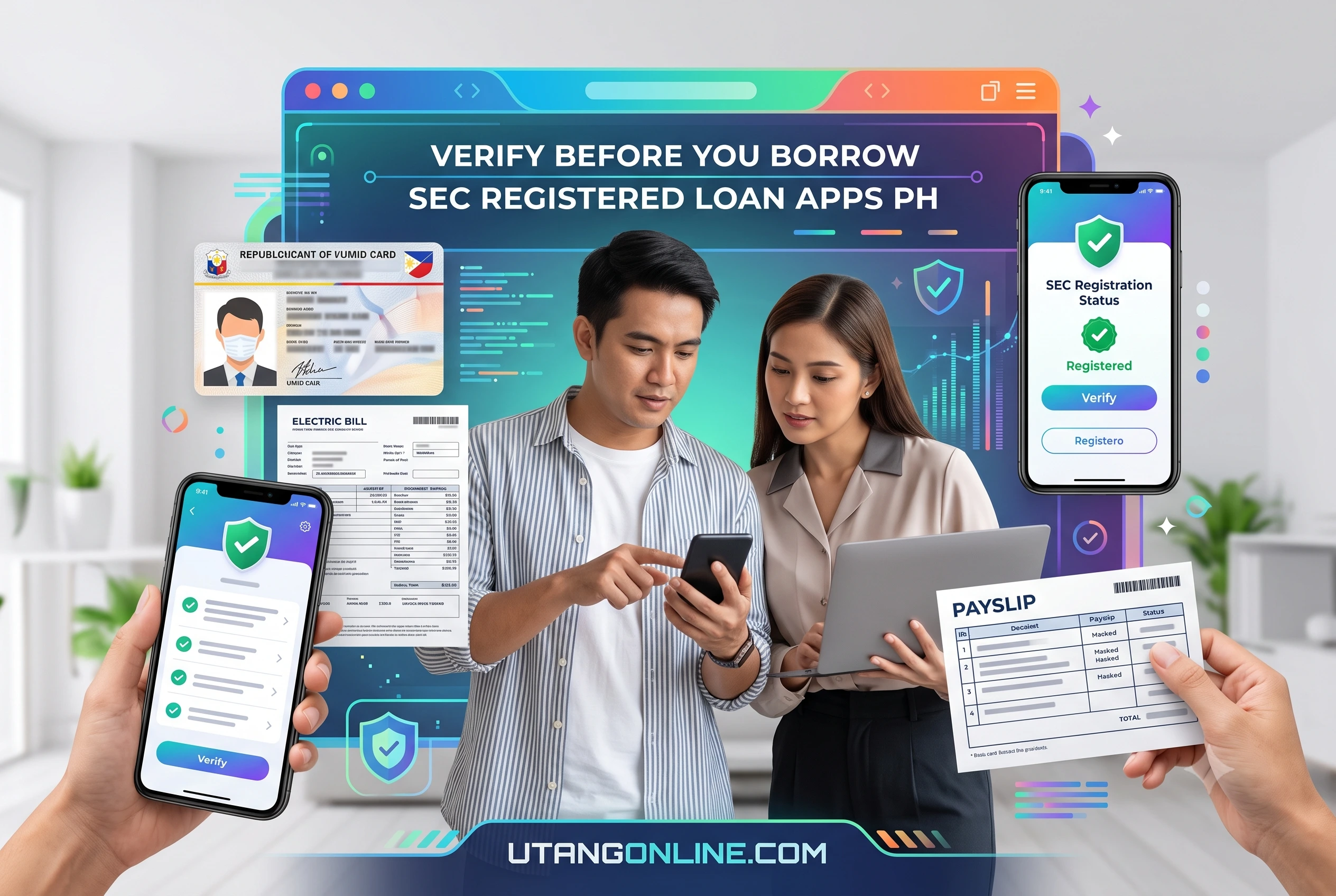
It usually starts with a single late payment. Then, the threatening text messages arrive – not just to your phone, but to your boss, your mother, and your high school friends. If you are reading this while dealing with a barrage of abusive messages from an online lending app, you are far from alone. The fear is real, but let’s clear the air immediately: under Philippine law, an unpaid civil debt does not carry a prison sentence. Your freedom is not at risk. What is at risk, however, is your data privacy. Before you hand over copies of your IDs and access to your phone’s sensitive data, you have to know exactly who you are dealing with.
Summary: To protect yourself from harassment and data theft, you must verify sec registered online loan apps philippines directly through the official SEC database. Do not trust the registration numbers displayed on the app’s homepage. Many phantom lenders hijack legitimate Certificate of Authority (CA) numbers. A legitimate lender will never scrape your contacts, ask for VIP processing fees, or threaten you with jail time.
Key Takeaways: Legitimate Platforms vs. Phantom Lenders
| Feature | Legitimate Registered Lenders | Unregistered Phantom Lenders |
| Data Privacy | Asks for exact GPS location and camera access only for eKYC. | Demands access to contacts, call logs, and local photo galleries. |
| Fees | Discloses all interest rates and deductions in a transparent contract. | Deducts massive upfront fees and applies high daily late charges. |
| Collection Tactics | Follows standard business hours and uses respectful channels. | Resorts to public shaming, death threats, and fake legal documents. |
| Transparency | Operates a registered corporate office verifiable via the SEC. | Changes app names frequently and uses personal e-wallet accounts. |
Why Do You Need to Check for a Certificate of Authority Before Downloading?
A Certificate of Authority (CA) legally permits a company to operate as a lending or financing entity. Without this, the app is operating illegally and is entirely exempt from regulatory caps on interest rates, consumer protections, and anti-harassment policies.
If you skip this step, you are walking blindfolded into a financial trap. The Securities and Exchange Commission (SEC) strictly regulates how lenders can operate within the country. A CA number is proof that the SEC Company Registration and Monitoring Department has vetted the corporate entity, audited their initial capital, and approved their lending terms. Legitimate lenders value their CA because losing it means the end of their business operations. Unregistered apps have nothing to lose, which dictates how aggressively they treat borrowers.
What Happens If You Borrow from Unregistered “Phantom” Lenders?
Borrowing from phantom lenders exposes you to extreme data privacy violations, exorbitant daily interest, and illegal debt collection practices. They operate completely outside the jurisdiction of standard consumer protection laws.
When our team tested several of these unregistered platforms, we noticed a recurring operational behavior. These phantom lenders frequently vanish from the Google Play Store or Apple App Store, only to reappear a week later with a slightly modified name and logo. Because they operate in the shadows, they ignore the Bangko Sentral ng Pilipinas (BSP) interest rate caps. You might borrow ₱5,000, only receive ₱3,200 after unexplained deductions, and find yourself owing ₱7,000 just seven days later. They trap borrowers in an intentional cycle of default, forcing you to take out loans from their sister applications just to cover the initial debt.
How Do Fake Lenders Weaponize Your Smartphone Contacts?
Predatory apps use malicious permissions to scrape your phonebook, weaponizing your contacts to publicly shame you into paying. The National Privacy Commission (NPC) strictly outlaws this unauthorized access.
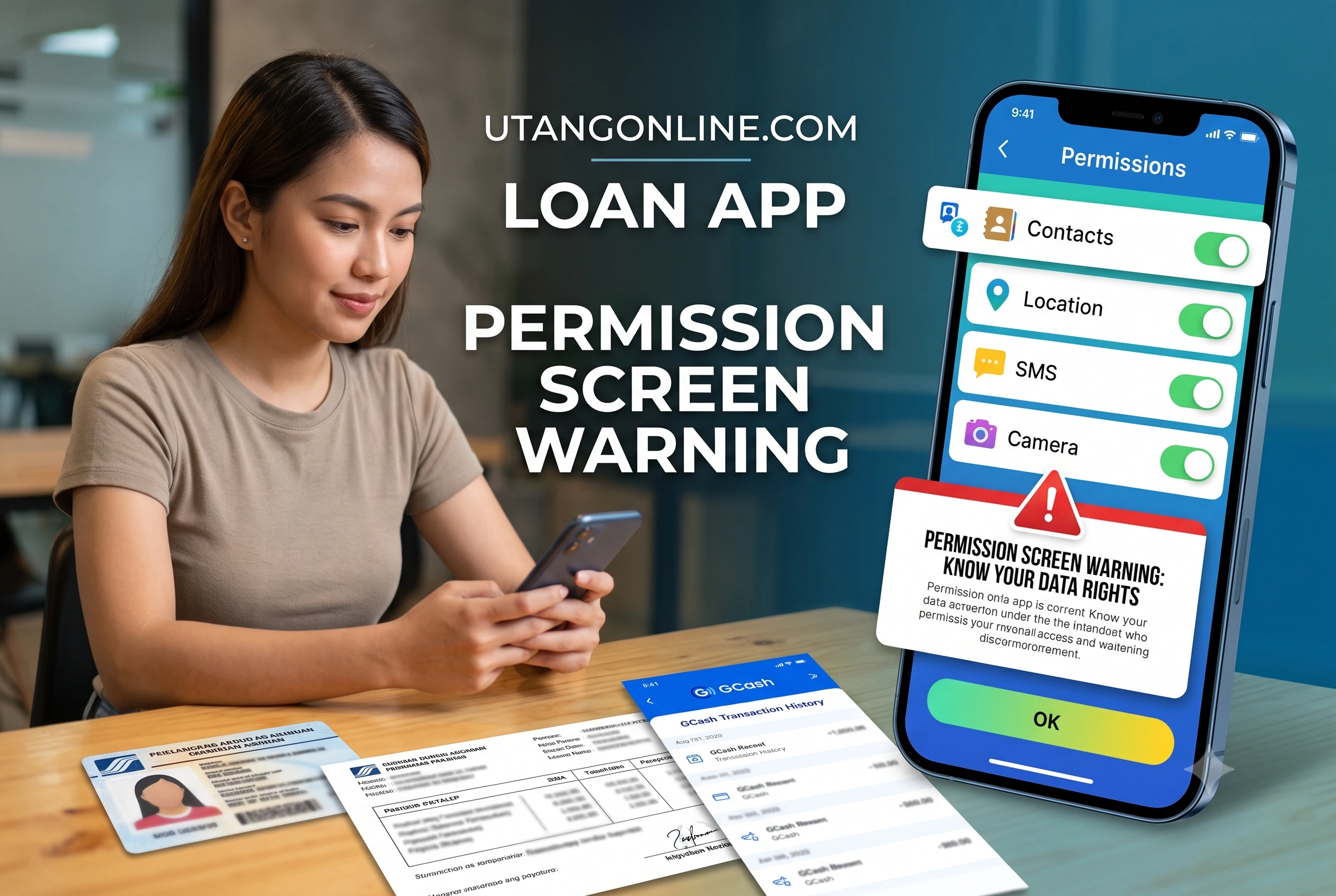
This is the exact friction point that terrifies most borrowers. During the installation phase, a fake app will request permission to access your local contacts, SMS logs, and even your photo gallery. They usually frame this as a mandatory “credit verification” step. If you click accept, the app quietly copies your entire phonebook to an offshore server. Once you miss a payment deadline by even an hour, their automated systems blast your contacts with texts claiming you named them as a co-maker or guarantor.
How Can You Actually Verify an App Using the SEC Database?
You can verify an app by downloading the updated “List of Lending Companies” PDF from the official SEC Philippines website. Cross-reference the app name and the exact operating company name.
Finding legit online loans philippines requires looking past the glossy marketing. Just because an app has thousands of positive reviews on an app store does not mean it is operating legally – review farms easily manipulate those ratings. The only source of truth is the actual regulatory body.
Where Do You Find the SEC List of Revoked and Registered Entities?
Visit the SEC website’s Lending and Financing Companies section to find publicly available, regularly updated lists of registered and revoked apps. Always check the “date updated” stamp on the document.
The process is highly specific but straightforward. Open your browser and head to the official SEC Philippines website. Navigate to the section dedicated to Lending and Financing Companies. Here, the SEC provides several PDF files: a list of companies with an active Certificate of Authority, a list of platforms that have been issued Cease and Desist Orders (CDO), and a list of revoked licenses. You have to open the active list and use your device’s search function to look up either the name of the app or the corporate entity operating it. Keep in mind that a single registered corporation might operate three or four different lending apps.
What Should You Do If an App Shows a Fake SEC Registration Number?
If an app displays a fake or borrowed SEC number, immediately uninstall it and report the application to the SEC Enforcement and Investor Protection Department. Do not proceed with the KYC process.
In our experience monitoring the lending market, scammers have grown highly sophisticated. They will actively browse the SEC database, find a legitimate lending company, and copy their exact CA and Registration numbers onto their own fake app’s homepage. We have seen borrowers input their UMID or passport details into an app, assuming it was safe because the numbers matched. To spot a cloned identity, check the disbursement method. A legally registered lender will disburse funds from a corporate bank account or a verified corporate e-wallet. If the funds arrive via a personal GCash or Maya number, you are dealing with a ghost operator using a stolen corporate identity.
How Can You Spot a Predatory Online Lending App in 2026?
You can spot predatory apps by looking for red flags like a lack of a physical office address, poor grammar in the app interface, and demands for upfront processing cash.
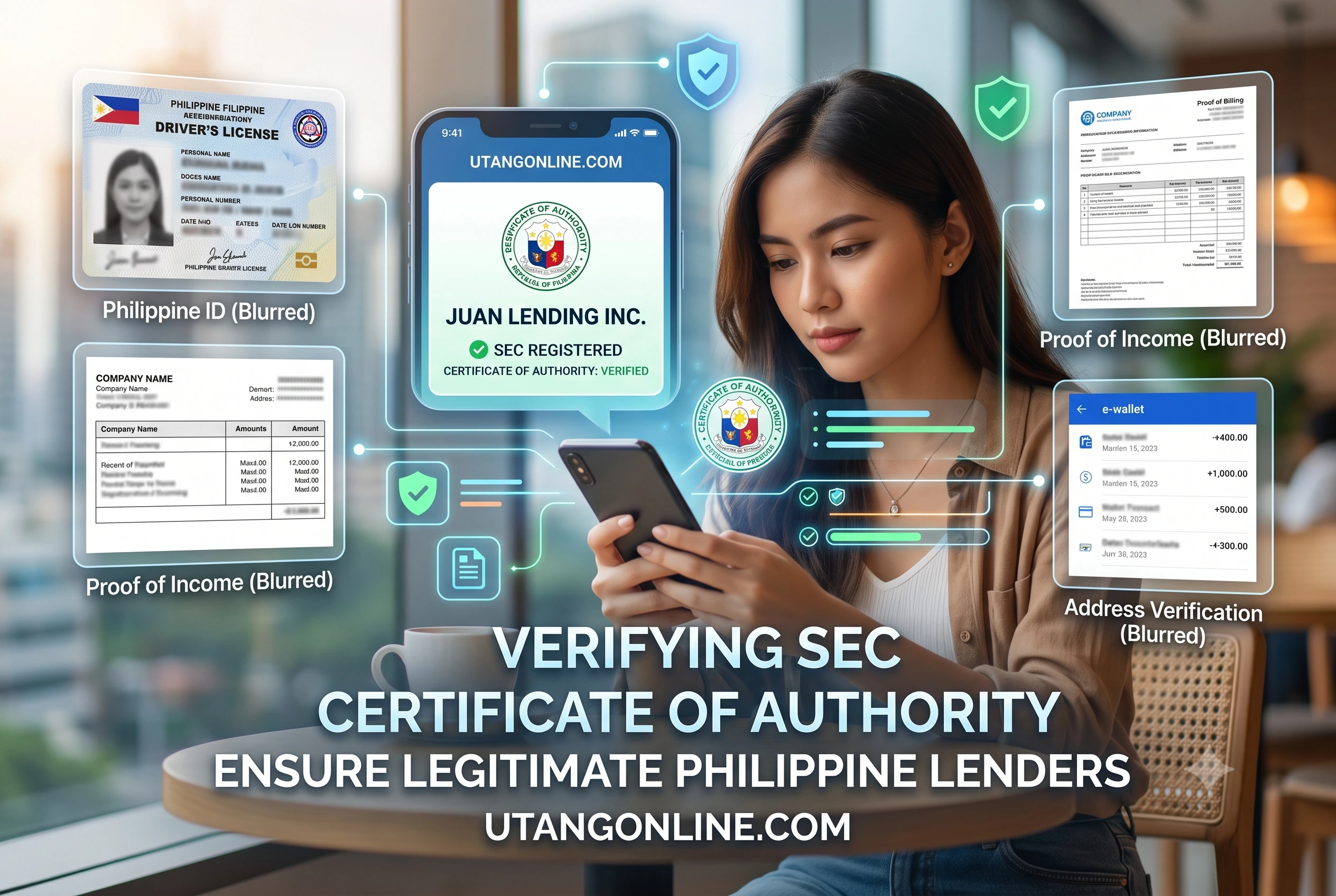
Legitimate fintech platforms invest millions into secure infrastructure, customer service, and smooth eKYC (Electronic Know Your Customer) workflows. Predatory apps invest heavily in collection agents and very little in the actual product. For example, legitimate apps like Tala or JuanHand use sophisticated AI to read your ID cards. If your UMID card has faded borders, a legitimate app might flag it for a 24-hour manual review. A fake app will accept a blurry photo of a library card immediately because they do not care about your identity; they only care about extracting your contact list.
Do Legitimate Lenders Ask for Upfront “VIP Processing” Fees?
Legitimate lenders deduct processing fees from your final loan disbursement, whereas scammers demand upfront cash via e-wallets to fast-track approvals. Never pay out of pocket to borrow money.
This is a specific tactic known as the “VIP Loan Scam.” The app will notify you that you are pre-approved for a massive limit – say, ₱50,000. However, to access those funds immediately, the customer service agent will instruct you to send a ₱2,000 “processing fee” or “VIP activation fee” to a personal e-wallet account. Legitimate digital banks and SEC-registered lenders never operate this way. Any standard processing fees or documentary stamp taxes are legally required to be deducted from the actual loan proceeds before the money is sent to you.
How Do You Spot Illegal Auto-Debit Mandates and Hidden Deductions?
Predatory apps often bury unauthorized auto-debit agreements in their terms, draining your bank account before the actual due date. Always read the digital loan contract before clicking accept.
When assessing the cost of a loan, borrowers often only look at the advertised monthly interest rate. They completely miss the structural traps. Phantom apps are notorious for applying massive hidden penalty charges that activate the exact minute your loan becomes overdue. Furthermore, some unregistered apps hide clauses in their terms and conditions that give them permission to auto-debit any linked bank account or e-wallet. You might wake up on your payday to find your entire salary wiped out by the lender without your consent.
What Are Your Legal Options If You Are Being Harassed by an Online Lending App?
You can file formal complaints against abusive lenders with the SEC, the National Privacy Commission (NPC), and the Philippine National Police Anti-Cybercrime Group.
When the harassment starts, the psychological toll is heavy. Collection agents are trained to make you feel isolated, helpless, and afraid. They will fabricate documents that look official to scare you into emptying your savings. You must pause, block their numbers, and evaluate your situation analytically.
Can You Be Imprisoned for Unpaid Online Loan Debts?
Article III, Section 20 of the Philippine Constitution explicitly states that no person shall be imprisoned for debt. Do not let collection agents intimidate you with fake arrest warrants.
A common tactic among rogue collection agencies is to send a photo of a drafted “Barangay Blotter” or a fake subpoena from a regional trial court. They will threaten to dispatch a mobile patrol to your workplace to arrest you. This is pure intimidation. While legitimate lenders can file civil cases for collection of sum of money (which may affect your credit score and result in a court order to pay), you cannot go to jail simply for being unable to settle a personal loan. However, if you submitted fraudulent IDs or fake bank statements during your application, that crosses into the territory of estafa (fraud), which is a criminal offense.
How Do You File a Formal Complaint with the National Privacy Commission (NPC) and SEC?
Gather screenshots of threatening messages, exact loan details, and app information, then submit them via the online complaint portals of the NPC and SEC.
Taking action requires evidence. Do not delete the threatening text messages or Viber chats. Take clear screenshots showing the sender’s number, the date, and the abusive language.
First, go to the SEC website and locate the Enforcement and Investor Protection Department (EIPD). They have a specific email address and web form dedicated to complaints against abusive lending companies. Submit your evidence there. Second, if the app has contacted people in your phonebook, that is a direct violation of the Data Privacy Act of 2012. You must file a separate complaint with the National Privacy Commission (NPC). The NPC has the authority to issue immediate takedown orders and can coordinate with Google and Apple to remove the offending application from their stores entirely.
Taking these steps not only protects you, but it actively helps dismantle the infrastructure these phantom lenders rely on to victimize others. Keep your data locked down, verify every license directly at the source, and never let a collection agent dictate your peace of mind.
References
- Securities and Exchange Commission (SEC) PhilippinesOrganization: SEC PhilippinesResource: List of Registered Lending and Financing CompaniesURL: https://www.sec.gov.ph/lending-companies-and-financing-companies-2/list-of-lending-companies/
- National Privacy Commission (NPC)Organization: Republic of the Philippines NPCResource: Guidelines on the Processing of Personal Data for Loan-Related TransactionsURL: https://www.privacy.gov.ph/issuances/circular-issuances/
- Bangko Sentral ng Pilipinas (BSP)Organization: Bangko Sentral ng PilipinasResource: Consumer Protection Policy and Interest Rate CapsURL: https://www.bsp.gov.ph/SitePages/Regulations/Regulations.aspx
Last Updated on July 7, 2026 by Michael Reyes
