
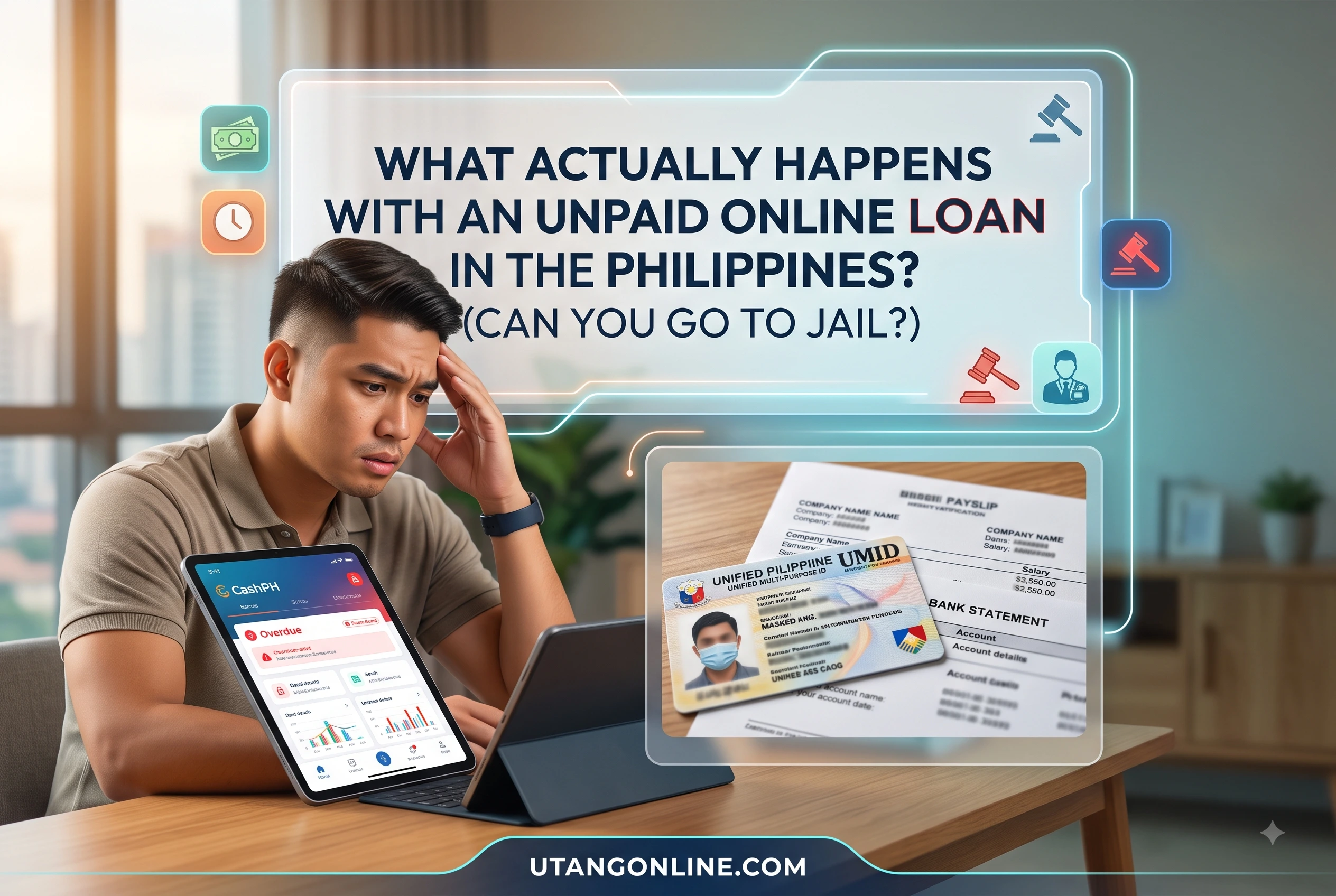
It usually starts with a single notification. Perhaps it is a text message from an unknown 0917 number, written entirely in capital letters, threatening a barangay blotter or a police visit. If you are sitting there staring at your phone, heart pounding because you cannot settle your balance this week, let me tell you the most important fact you need to hear right now: you cannot be imprisoned simply for owing money.
In our decade of auditing digital lending operations in the Philippines, we have seen thousands of borrowers driven to severe anxiety by collection agencies using script-based intimidation tactics. The reality of defaulting on a loan is primarily a civil and administrative issue, not a criminal one. The moment you strip away the aggressive bluffing of third-party collectors, the actual legal process is highly structured, predictable, and manageable.
Summary: An unpaid online loan in the Philippines results in civil liability, meaning you face financial penalties, a damaged credit score with the Credit Information Corporation (CIC), and potential Small Claims Court action. You cannot go to jail for standard debt default under the 1987 Constitution. However, ignoring legal demand letters can lead to civil judgments, while using fake documents to secure the loan can trigger criminal fraud charges.
Key Takeaways: Debt Default Realities vs. Myths
| Concern | The Myth (What Collectors Say) | The Legal Reality (What Actually Happens) |
| Imprisonment | “We will send the police to arrest you.” | False. Debt is a civil matter protected by the Constitution. |
| Barangay Warrants | “A barangay warrant of arrest is issued.” | False. Barangays cannot issue arrest warrants; they only mediate. |
| NBI Clearance | “Your NBI will have a ‘Hit’ for estafa.” | False. Purely civil debt cases do not reflect on an NBI clearance. |
| Credit Score | “We will blacklist you everywhere.” | True. Legit apps report defaults to the CIC, affecting future loans. |
| Data Shaming | “We will text all your phone contacts.” | Illegal. This violates the Data Privacy Act and SEC regulations. |
Can You Go to Jail for an Unpaid Online Loan in the Philippines?
Direct Answer: No, you cannot be sent to jail for simply failing to pay an online loan due to lack of funds. The law strictly classifies standard debt default as a civil issue, meaning the lender can only pursue financial restitution, not criminal imprisonment.
What Does Article III Section 20 of the Philippine Constitution Say About Debt?
Direct Answer: Article III, Section 20 of the 1987 Philippine Constitution explicitly states: “No person shall be imprisoned for debt or non-payment of a poll tax.” This constitutional right protects borrowers from being jailed solely because they ran out of money to pay a legitimate obligation.
When our team tested late payment flows on top registered Philippine loans, we routinely analyzed the automated SMS cascades triggered at Day 1, Day 7, and Day 30 of default. While illegal lending apps immediately escalate to threats of police action, compliant platforms never threaten imprisonment because their legal departments know it violates the Constitution. If a collection agent texts you claiming a “warrant of arrest for unpaid debt” is on the way, they are legally bluffing. The constitutional guarantee separates your financial inability to pay from criminal behavior.
Are There Exceptions Where Unpaid Loans Lead to Criminal Charges (Like B.P. 22)?
Direct Answer: Yes, criminal charges can apply if you committed fraud to get the loan (Estafa) or if you issued a bounced post-dated check (violation of B.P. 22). However, standard app-based microloans rarely use checks, making these exceptions highly uncommon for typical digital borrowers.
While the Constitution protects you from debtor’s prison, it does not protect you from the consequences of deception. If you applied for the loan using a fake UMID card, a forged payslip, or a stolen identity, the lender can file a criminal case for Estafa (fraud) under the Revised Penal Code. Furthermore, if you secured the loan by issuing physical post-dated checks that subsequently bounce, you fall under the jurisdiction of the Bouncing Checks Law (Batas Pambansa Blg. 22). Fortunately, the vast majority of digital lending apps in the Philippines rely purely on eKYC (electronic Know Your Customer) and direct bank/e-wallet disbursements, meaning B.P. 22 liability is almost non-existent for pure app users.
What Will Collection Agencies Do If You Default on an Online Loan?
Direct Answer: Collection agencies will utilize the “bucket system,” progressively escalating from automated SMS reminders and phone calls to formal legal demand letters. If the loan remains unpaid, they will report your default to the national credit registry and may eventually file a Small Claims case.
What Are the Legal Limits of Debt Collectors Under SEC Fair Collection Rules?
Direct Answer: Under SEC Memorandum Circular No. 18, collectors cannot use threats, physical harm, obscenities, or contact people in your phonebook who are not explicitly named as guarantors. They are only allowed to contact you during reasonable hours (usually 8:00 AM to 6:00 PM).
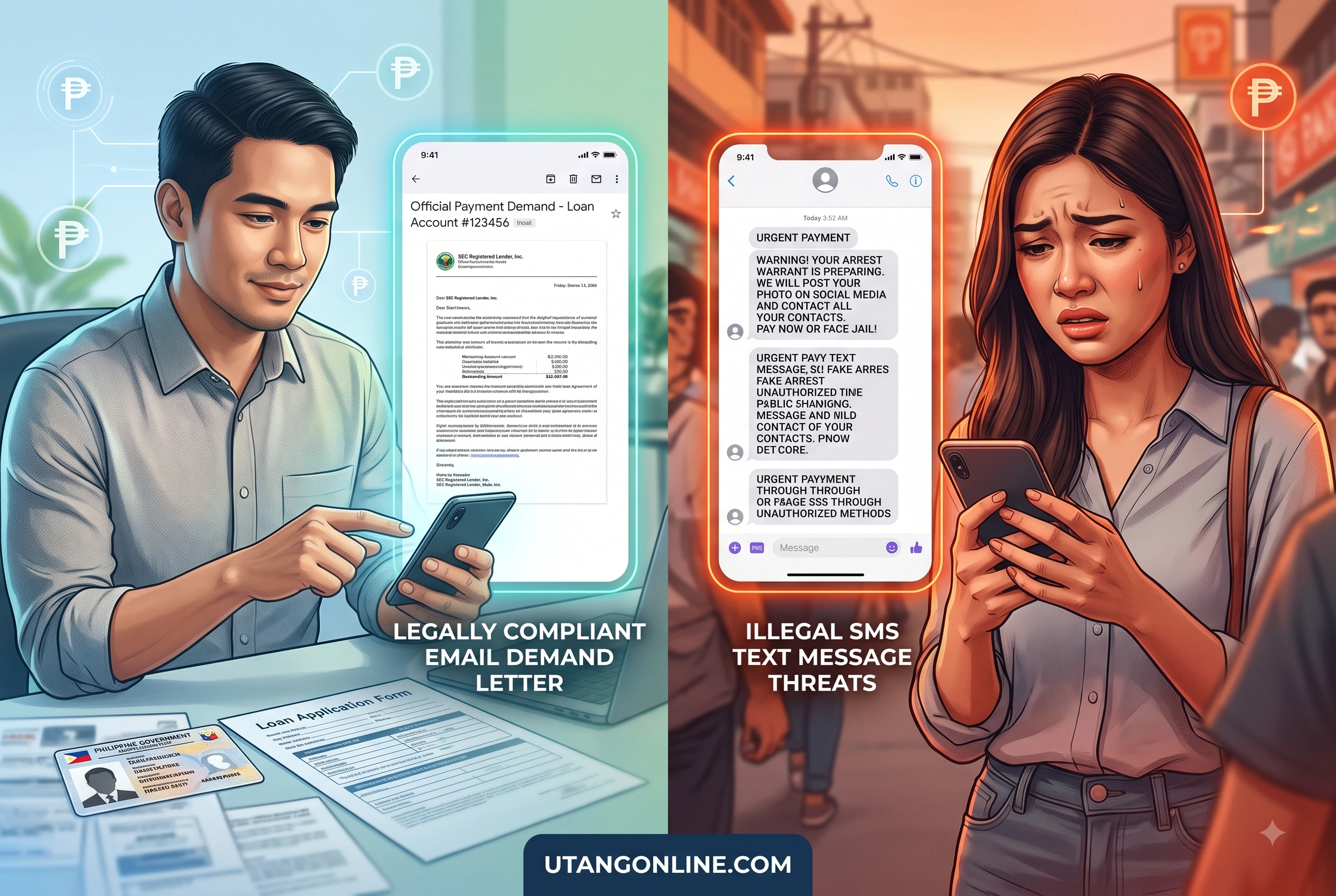
Through our years of consulting with legitimate fintech operators, we have closely observed how SEC fair collection rules fundamentally changed the industry. A legitimate, SEC-registered lender will utilize a CRM (Customer Relationship Management) system that records every call. If an agent curses at you or threatens to post your face on Facebook, they are committing an illegal act. The SEC strictly prohibits “data shaming” – the practice of scraping a borrower’s contact list and texting their relatives or boss. If a collector violates these boundaries, the fault shifts, and the lending company faces severe regulatory penalties, including the potential revocation of their secondary license to operate as a lending company.
How Can You Stop Harassment from Illegal Lending Apps?
Direct Answer: You can stop harassment by filing a formal complaint with the SEC, the National Privacy Commission (NPC), and the PNP Anti-Cybercrime Group. Document all harassing texts, block the numbers, and refuse to negotiate with unregistered, abusive platforms.
When dealing with unregistered apps (often called “shark apps”), standard logic fails. These apps operate outside Philippine jurisdiction and rely entirely on psychological warfare. In our experience guiding borrowers through this specific crisis, the most effective step is containment. Take screenshots of every abusive message, especially those threatening your life or reputation. Submit these directly to the NPC as evidence of a Data Privacy Act violation. Once you realize the app is illegal and engaging in criminal harassment, many consumer protection advocates advise cutting off contact entirely while the authorities handle the cybercrime report.
Can an Unpaid Online Loan Affect Your NBI Clearance or Employment?
Direct Answer: An unpaid online loan will not affect your NBI Clearance, but it can negatively impact your employment prospects if your future employer conducts strict background credit checks through the Credit Information Corporation (CIC).
Will a Debt Collection Case Show Up on Your NBI Record?
Direct Answer: No, a purely civil case for unpaid debt will not result in an NBI “Hit.” The National Bureau of Investigation only tracks criminal records, active arrest warrants, and pending criminal cases, not civil financial disputes.
One of the most persistent lies we see collection agents use in the Philippines is: “We will block your NBI Clearance.” This is an empty threat designed to induce panic, especially for OFWs or job seekers. During our audits of collection call centers, we actively flag and penalize agents using this script. Unless the lender has successfully filed and won a criminal case against you for Estafa (fraud) or B.P. 22 (bouncing checks) – and an actual judge has issued an arrest warrant – your civil debt will remain entirely invisible to the NBI.
Do Unpaid Loans Affect Your Credit Score with the CIC?
Direct Answer: Yes, SEC-registered online lenders are legally mandated to submit your credit data to the Credit Information Corporation (CIC). A defaulted loan will appear as a negative record, severely limiting your ability to get bank loans, credit cards, or housing loans in the future.
This is the real, lasting consequence of an unpaid online loan. The Philippine credit scoring ecosystem has matured rapidly. When we look at the backend risk assessment dashboards of major banks today, they pull data directly from the CIC. If you abandon a ₱10,000 digital loan today, it acts as a financial anchor. Five years from now, when you apply for an auto loan or a Pag-IBIG housing loan, the underwriter will see that unsettled default. The civil consequence is a frozen financial reputation, which is why negotiating a settlement is always better than simply deleting the app and changing your SIM card.
What Happens If a Lender Files a Small Claims Court Case Against You?
Direct Answer: If filed in Small Claims Court, you will receive a formal Summons from a Regional or Metropolitan Trial Court, requiring you to appear before a judge to resolve the civil dispute. The judge will order a mutually agreeable payment plan based on your verified income.
How Does the Philippine Small Claims Court Process Work?
Direct Answer: The Small Claims process is designed to be fast and inexpensive, handling debts up to ₱1,000,000 without the need for lawyers. The lender files a Statement of Claim, the court issues a Summons, and both parties attend a mandatory hearing to establish a payment compromise.
The Small Claims Court is actually the borrower’s friend, not an enemy. Many borrowers panic at the word “Court,” but in our professional experience, getting a legitimate debt moved to Small Claims is far less stressful than dealing with a relentless collection agency. You do not need to hire an expensive attorney; in fact, lawyers are explicitly banned from participating in the hearing. When you appear before the judge, you simply present your current financial reality – your payslips, your household expenses, and your proof of hardship. The judge will then mandate a fair, realistic restructuring plan that the lender is legally forced to accept, completely freezing the collection agency’s ability to harass you further.
What Should You Do If You Receive a Barangay Summon for Debt?
Direct Answer: If summoned by your Barangay for debt, you should attend the mediation session to show good faith, but understand that the Barangay Chairman can only mediate a compromise, not enforce wage garnishments or issue arrest warrants.
Collection agencies frequently use the Barangay justice system (Katarungang Pambarangay) as an intimidation tool. They will send a representative to your local barangay hall to file a complaint, resulting in a summon to your home. While it feels embarrassing, attending is highly recommended. It proves you are not running from the debt. During the mediation, simply state exactly what you can afford – even if it is only ₱500 a month. If the collector refuses your offer, the barangay will issue a “Certificate to File Action,” allowing the lender to go to Small Claims Court. The barangay has no power to lock you up or seize your television.
How Can You Legally Resolve an Unpaid Online Loan Crisis?
Direct Answer: You can resolve the crisis by initiating a debt restructuring request before you default, explicitly communicating your financial hardship, and offering a realistic partial payment plan to the lender’s official customer service channels.
How Do You Request a Debt Restructuring Plan from Your Lender?
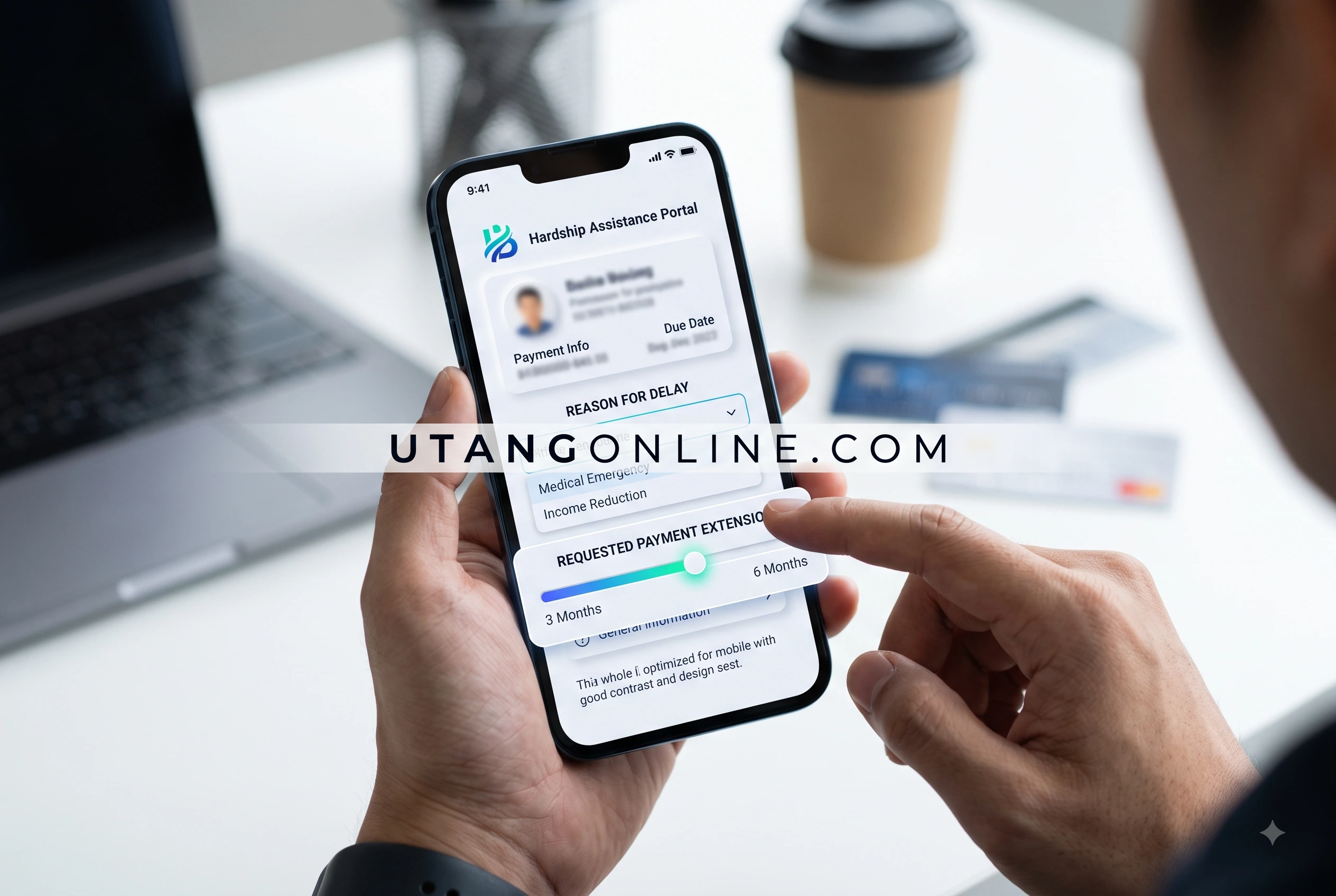
Direct Answer: Email the lender’s official support address stating your exact financial hardship, attaching proof (like a medical bill or termination letter), and proposing a specific, fixed monthly payment that waives accumulated penalty fees.
Do not attempt to negotiate with the third-party collection agent shouting at you on the phone; their only goal is immediate commission. Instead, bypass them. Go directly to the app’s official email address. In our operational reviews of loan recovery departments, we see that back-office managers are heavily authorized to offer “Amnesty Programs” or debt restructuring, especially once a loan is past 90 days late. They would rather recover 70% of the principal over six months than write off the entire loan as bad debt. Send a formal, polite email offering a compromise agreement, and insist that all further communication be done in writing.
Where Can You Find Free Legal Help for Debt Harassment in the Philippines?
Direct Answer: Borrowers facing illegal harassment can seek free legal guidance from the Public Attorney’s Office (PAO), the Integrated Bar of the Philippines (IBP) legal aid clinics, and the Securities and Exchange Commission (SEC) Enforcement and Investor Protection Department.
If you are dealing with a registered lender acting aggressively, the SEC is your primary shield. You can file a formal complaint via their official web portal, providing your screenshots and call recordings. The SEC actively issues Cease and Desist Orders (CDO) against abusive lenders. If the harassment has crossed into criminal threats or severe public humiliation, the PAO can assist indigent citizens in drafting demand letters against the collection agencies, or helping you file formal cybercrime complaints with the PNP. You are never without options, and you never have to face abusive digital debt collectors alone.
References
- Securities and Exchange Commission (SEC)Organization: Republic of the Philippines Securities and Exchange CommissionResource: SEC Memorandum Circular No. 18 Series of 2019 (Prohibition on Unfair Debt Collection Practices)URL: https://www.sec.gov.ph/mc-2019/sec-mc-no-18-series-of-2019/
- Official Gazette of the Republic of the PhilippinesOrganization: Philippine GovernmentResource: The 1987 Constitution of the Republic of the Philippines – Article IIIURL: https://www.officialgazette.gov.ph/constitutions/the-1987-constitution-of-the-republic-of-the-philippines/the-1987-constitution-of-the-republic-of-the-philippines-article-iii/
- Credit Information Corporation (CIC)Organization: Credit Information CorporationResource: Borrower’s Rights and Credit ReportsURL: https://www.creditinfo.gov.ph/borrowers-rights
- National Privacy Commission (NPC)Organization: National Privacy CommissionResource: Advisory on Data Privacy and Online Lending AppsURL: https://www.privacy.gov.ph/online-lending-applications/
Last Updated on August 15, 2026 by Michael Reyes
