
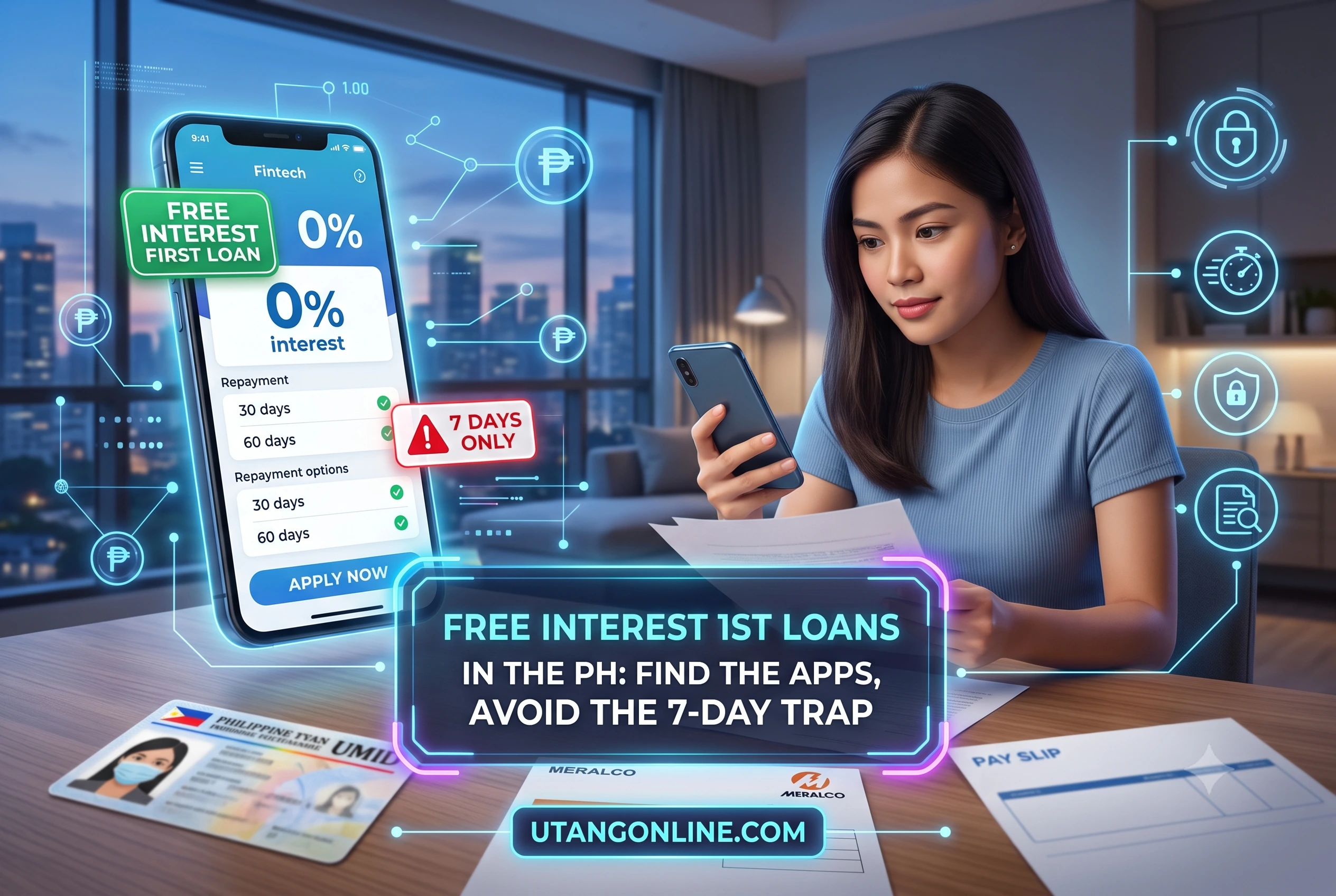
Seeing a zero-interest offer when you are short on cash feels like a rare stroke of luck. If you are scrambling to cover a utility bill or a sudden medical expense, an ad promising immediate funds with zero fees is incredibly tempting. But as someone who has spent over a decade analyzing how digital lenders design their business models, I have to be completely straight with you: these offers are not acts of charity. They are highly calculated customer acquisition tools.
You absolutely can get a first loan with no interest, and if you play by the rules exactly, it costs you nothing. However, the margin for error is zero. Miss the deadline by a single day, and the financial penalties hit hard. My goal here is to show you exactly how these promotions work, which platforms actually honor them, and how to use them without falling into a debt cycle.
Summary: A first loan free interest in the Philippines is a promotional tactic used by SEC-registered lending apps to acquire new users. These promos typically offer 0% interest for a strict 7 to 14-day period. Borrowers pay no fees if settled on time, but face massive daily penalty charges if they miss the short deadline.
Key Takeaways: Top 0% Interest First-Loan Promos (2026 Data)
| Lending App | 0% Promo Duration | Typical 1st Loan Approval | eKYC Friction Point to Watch For |
| Digido | 7 Days | PHP 2,000 – PHP 5,000 | Highly sensitive ID glare rejection |
| Moneycat | 7 Days | PHP 3,000 – PHP 5,000 | Requires well-lit facial recognition match |
| Tala | Up to 30 Days (Varies by user) | PHP 1,000 – PHP 2,000 | Strict device data/contact scanning |
| JuanHand | 7 Days (Seasonal Promo) | PHP 2,000 | App permissions must remain active |
What Does a “First Loan Free Interest” Promo Actually Mean?
Summary: A 0% interest first loan means the lender waves all processing fees and interest charges for a brand-new borrower on their very first transaction. You borrow exactly PHP 3,000 and repay exactly PHP 3,000, provided you pay before the promotional maturity date.
How Do Lenders Make Money on 0% Interest Loans?
Summary: Digital lenders treat 0% first loans as “loss leaders.” They willingly absorb the Customer Acquisition Cost (CAC), knowing that behavioral data shows most borrowers will return for a second, fully-priced loan, or miss the strict deadline and trigger high penalty fees.
To understand why a company would give away money for free, you have to look at their marketing budgets. In the Philippine fintech sector, acquiring a verified, transacting user through Facebook or TikTok ads can cost a lender anywhere from PHP 500 to PHP 1,500 per person.
Instead of paying that money entirely to ad networks, lenders use it to subsidize your first loan. Once you download the app, clear the eKYC (Know Your Customer) process, and link your GCash or Maya account, you are in their ecosystem. When we track user cohorts, the data is predictable: a significant percentage of users who experience a smooth 0% loan will eventually come back three months later when they need cash again. On that second loan, the app will charge their standard processing fees and monthly interest rates (EIR), easily recouping the cost of their initial promotion.
What Happens If I Pay a 0% Interest Loan Late?
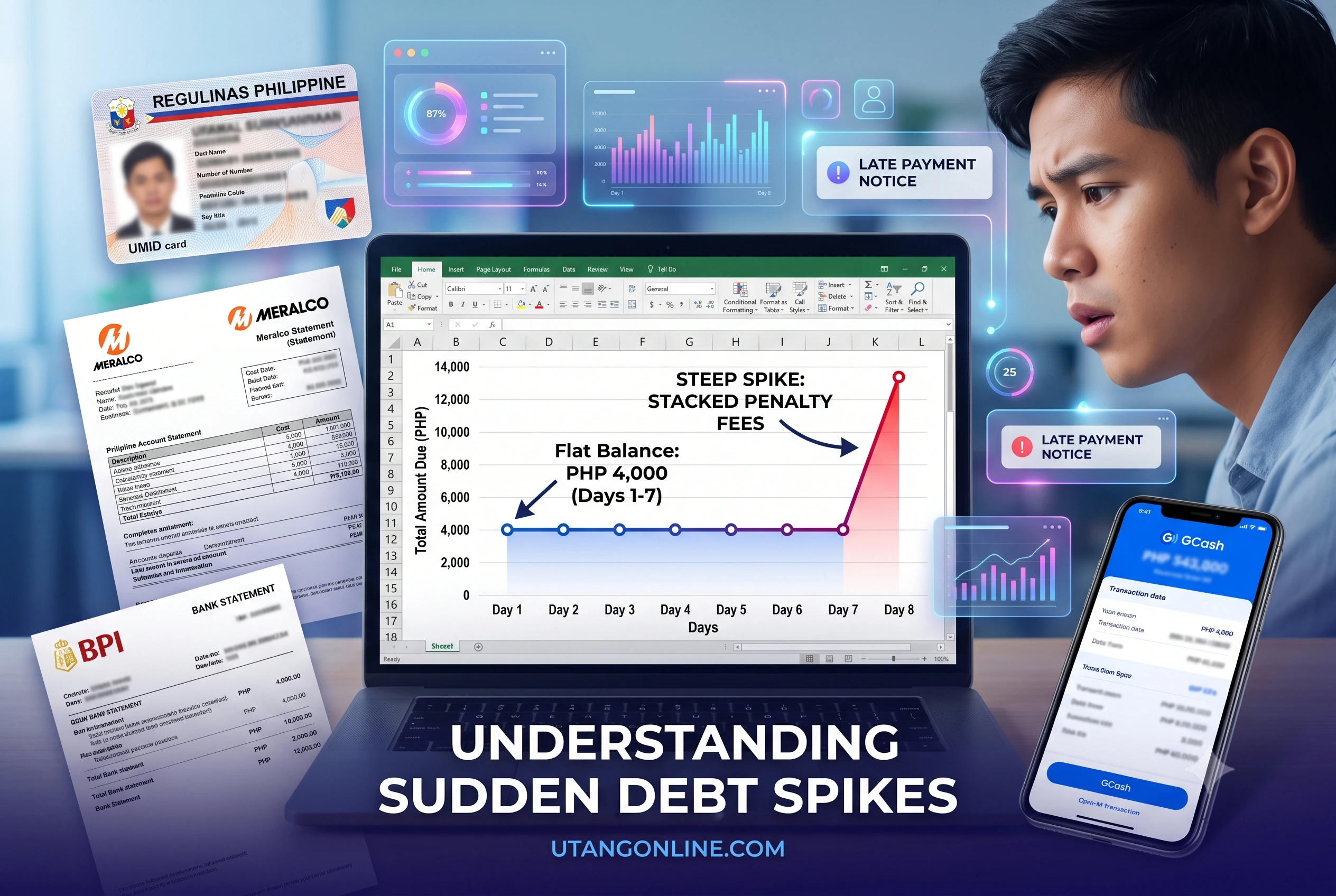
Summary: Missing the deadline triggers the “Day 8 Penalty Cliff.” The lender will instantly revoke the 0% promo, apply a one-time late penalty (often PHP 500 or more), and begin charging standard daily interest on the principal amount, causing the debt to spike overnight.
This is the exact operational trap that catches thousands of distressed borrowers. During our internal testing of several popular apps, we simulated late payments to map the exact fee structures.
If you borrow PHP 4,000 on a 7-day 0% promo, your balance on Day 7 is exactly PHP 4,000. But if your salary is delayed and you attempt to pay on Day 8, the app does not just charge you one day of interest. The system automatically voids the promotional waiver. You will instantly see a flat late fee (e.g., PHP 500) stacked on top of a daily interest charge of up to 1% per day (subject to BSP rate caps). Suddenly, that PHP 4,000 debt becomes PHP 4,540 in a matter of 24 hours.
Which Lending Apps Offer Genuine 0% Interest for First-Time Borrowers?
Summary: As of 2026, SEC-registered apps like Digido, Moneycat, and Tala offer genuine 0% interest promos to new users. However, these offers are hard-coded with strict rules; you must manually select the promotional terms within the app UI to avoid accidental charges.
Does Digido Offer a 7-Day Free Interest Promo?
Summary: Yes, Digido currently offers a 7-day 0% interest loan for first-time applicants. Borrowers can typically access between PHP 2,000 and PHP 5,000 on their first attempt, with funds disbursed directly to standard e-wallets or bank accounts.
Digido is one of the most aggressive platforms when it comes to user acquisition. When our team tested the Digido application flow last quarter, we noticed a very specific user interface quirk that you need to watch out for.
When you get approved, the app presents a slider allowing you to choose your repayment date. The slider often defaults to 14 days. If you leave it at 14 days, the system automatically applies processing fees and interest because the 0% promo is strictly capped at 7 days. You have to manually drag the slider back to the 7-day mark. Once you do, the screen will update to show zero fees. Do not blindly click “Accept” without verifying that the final repayment amount matches your principal perfectly.
What is the Catch with Moneycat’s First-Time Borrower Promo?
Summary:Moneycat offers a similar 7-day zero-interest promotion, but the catch lies in their aggressive automated collection reminders. The platform begins sending automated SMS and voice prompts two days before the loan is due, which can feel overwhelming to unprepared borrowers.
Moneycat provides a very smooth disbursement experience, often crediting GCash accounts within five minutes of approval. The zero-interest offer is entirely legitimate. However, based on hundreds of borrower logs I have reviewed, their collection system is highly automated and highly sensitive.
Even if you fully intend to pay on Day 7, you will start receiving payment reminders by Day 5. These are system-generated and do not mean your account is in bad standing, but they induce a lot of anxiety. If you are using Moneycat specifically for the 0% promo, expect the communication volume to be high, and make sure your repayment channel (like ECPay or 7-Eleven) is online the morning your loan is due.
How Do I Apply for These Free Interest Promos Without Getting Rejected?
Summary: To avoid automated rejection, you must provide clear ID photos, maintain consistent data matching your credit profile, and ensure your smartphone allows the app to access necessary alternative credit data like basic device location.
What Are the Standard Document Requirements for 0% Apps?
Summary: The standard document requirements include one primary government-issued ID (PhilSys ID, Passport, Driver’s License, or UMID), an active mobile number, and a verifiable disbursement account in your own name.
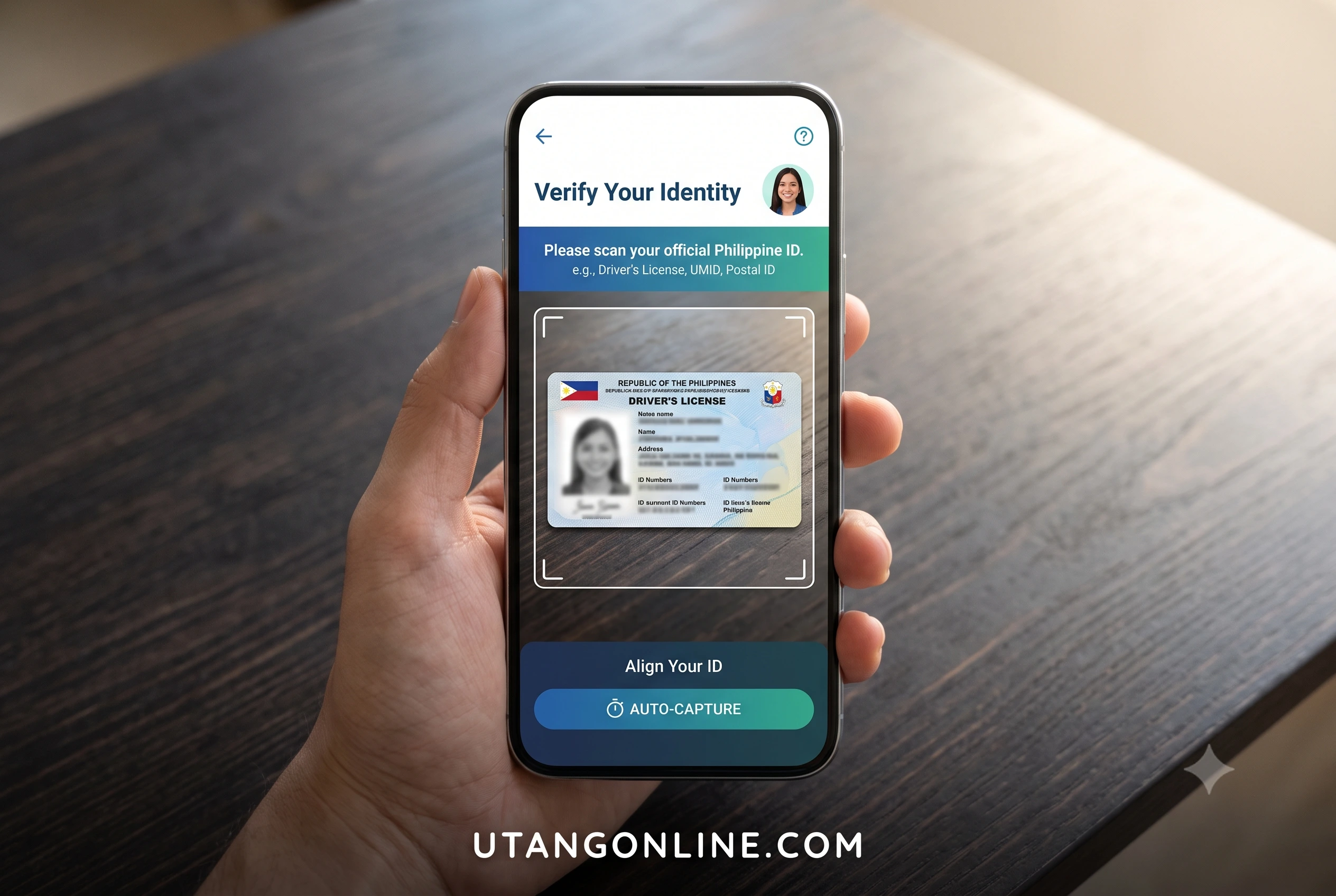
Before you even download an app, prepare your paperwork. Digital lenders do not have loan officers manually reading your files; they use Optical Character Recognition (OCR) to read your ID. If you try to submit a digitized PhilSys ID with glare from a ring light, the OCR fails, and the system instantly rejects you.
When you gather your standard document requirements, make sure you are in a room with natural sunlight. Place the ID on a dark, flat surface. Ensure the name on your ID matches the exact spelling on your GCash or Maya account. If your ID says “Maria De La Cruz” but your GCash is registered as “Maria Cruz,” the API handshake between the lender and the e-wallet will fail due to a name mismatch, freezing your 0% promo application.
Why Do Apps Reject First-Time Applicants During the eKYC Process?
Summary: Most first-time rejections happen because the automated liveness check fails to match the user’s face to their ID, or because the borrower denied the app essential device permissions required for alternative credit scoring.
Digital lenders in the Philippines largely serve the unbanked, meaning they do not rely on traditional credit scores. Instead, they use alternative data. When you install the app, it will ask for permissions—typically location, camera, and sometimes app inventory.
If you deny these permissions out of privacy concerns, the app’s risk engine cannot assign you a trust score, resulting in an automatic rejection. Similarly, the liveness check (where the app asks you to blink or turn your head) is highly sensitive to background lighting. During one of our UI tests, an applicant was rejected simply because a ceiling fan was casting moving shadows across their face, causing the anti-fraud algorithm to flag the video as a potential deepfake.
How Can I Safely Maximize These Fintech Promos?
Summary: You can safely maximize these offers by treating them strictly as short-term liquidity bridges, setting phone alarms for two days before maturity, and never borrowing from one app to pay off another.
Is Cycling Through Different Apps for Free Cash a Good Idea?
Summary: Cycling through apps (promo hopping) can provide 30 to 45 days of free liquidity if timed perfectly, but it carries a high risk of a debt spiral. If one app denies your application, you will lack the funds to pay off the previous app, triggering massive penalties.
I see this scenario play out constantly. A tech-savvy borrower realizes they can get PHP 3,000 from App A for 7 days. On Day 6, they apply for a 0% loan from App B to pay off App A. They do this across four different apps to keep the cash floating for a month without paying interest.
While mathematically possible, I strongly advise against it. These apps frequently update their risk models. You might easily get approved by App A and App B, but if App C suddenly tightens its approval rates due to a macro-economic shift, you are suddenly left holding a debt you cannot clear. The moment that chain breaks, the stacked late fees from App B will wipe out any financial benefit you gained from the free interest promos. Use these offers for actual emergencies, not as a revolving credit line.
How Do I Ensure I Am Using a Legit Online Loan in the Philippines?
Summary: Always verify the lender against the Securities and Exchange Commission (SEC) official list of registered lending companies. A legitimate platform will prominently display its SEC Registration and Certificate of Authority (CA) numbers inside the app and on its website.
The most dangerous mistake you can make is downloading an app from a random Facebook link without checking its credentials. Shark apps often mimic the 0% promos of legitimate lenders to harvest your contact list and extort you later.
To ensure you are using a legit online loan philippines, open the SEC website and check their publicly updated list of revoked and valid Certificates of Authority. Legitimate apps are bound by Bangko Sentral ng Pilipinas (BSP) and National Privacy Commission (NPC) rules. They cannot legally text your phonebook contacts to shame you for late payments. If an app asks for permission to access your full contact list rather than just a few emergency references, uninstall it immediately. No amount of free interest is worth giving a predatory lender access to your personal network.
References
- Securities and Exchange Commission PhilippinesOrganization: SEC PhilippinesResource: List of Registered Online Lending PlatformsURL: https://www.sec.gov.ph/lending-companies-and-financing-companies-2/list-of-registered-online-lending-platforms/
- Bangko Sentral ng PilipinasOrganization: BSPResource: Ceilings on Interest Rates and Other Fees for Specific LoansURL: https://www.bsp.gov.ph/Regulations/Issuances/2022/c1133.pdf
- National Privacy CommissionOrganization: NPC PhilippinesResource: Circular on the Processing of Personal Data for Loan-Related TransactionsURL: https://www.privacy.gov.ph/wp-content/uploads/2020/10/NPC-Circular-No.-20-01-Processing-of-Personal-Data-for-Loan-Related-Transactions.pdf
Last Updated on July 7, 2026 by Michael Reyes
