
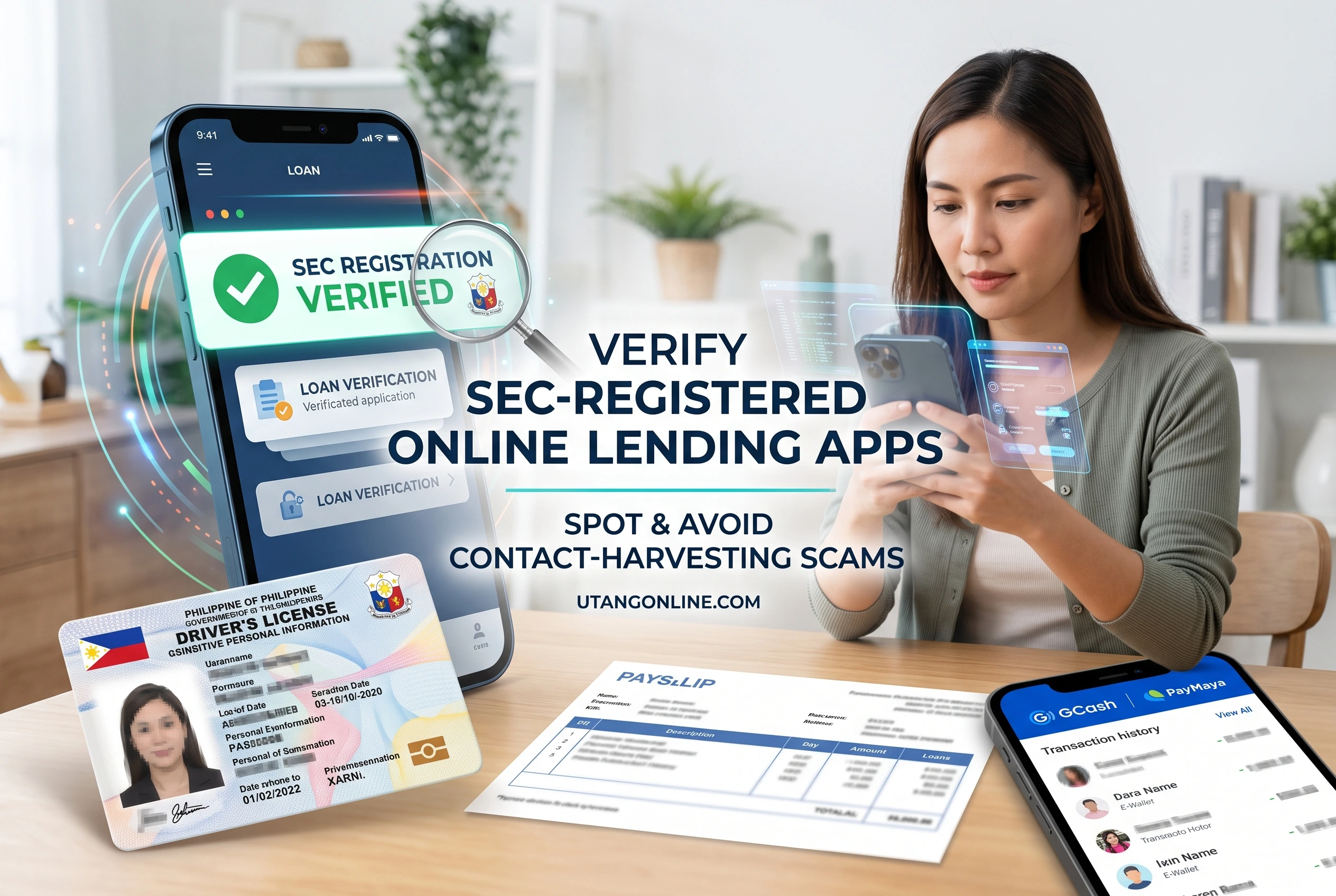
If you are reading this because a lending application is threatening to message your family, friends, or coworkers over a delayed payment, take a very slow breath. You are not alone, and you need to know this fact right now: under Philippine law, unpaid civil debts do not result in imprisonment. The aggressive texts and calls you are receiving are designed to trigger panic, forcing you to pay exorbitant fees out of fear. My goal here is to shift the power back to you. After a decade of analyzing digital credit platforms and helping borrowers navigate regulatory frameworks, I have seen exactly how predatory operators manipulate phone permissions and fake their credentials. Before you submit your ID to another platform, we are going to walk through exactly how to cross-reference their claims with actual government databases and protect your personal data.
Summary:
Verifying SEC registered online lending apps in the Philippines requires checking the official Securities and Exchange Commission (SEC) database for an active Certificate of Authority (CA). Borrowers must look out for predatory apps that illegally harvest contacts and violate the Data Privacy Act of 2012.
Key Takeaways: Safe Borrowing vs. Predatory Lending
| Feature | Legitimate SEC-Registered Lenders | Illegal / Predatory Loan Apps |
| SEC Certificate | Clearly displays a valid, active CA number on the app and SEC website. | Uses a fake CA number, or clones the name of a registered corporation. |
| Phone Permissions | Only requests basic data necessary for KYC (Camera for selfies/ID). | Demands access to Contacts, Photo Gallery, and Call Logs before approval. |
| Interest Rates | Adheres to the Bangko Sentral ng Pilipinas (BSP) nominal interest rate caps. | Imposes hidden 30-50% processing fees, deducting them instantly from the loan. |
| Collection Tactics | Follows legal collection protocols, contacting only your declared co-maker. | Resorts to public shaming, texting your entire phonebook, and issuing death threats. |
Why Do Some Loan Apps Ask to Access My Contacts and Gallery?
Loan apps ask for contact and gallery access either for mild identity verification or, in the case of illegal apps, to harvest your data for harassment. Predatory platforms steal your phonebook to publicly shame you if you miss a payment deadline.
When our testing team installed several shadow lending applications on a sandbox device, we noticed a terrifying pattern. Within three seconds of opening the app, before a privacy policy even appeared on the screen, a system prompt demanded access to the phone’s contact list, SMS inbox, and photo gallery.
Why do they do this? Legitimate lenders rely on credit bureaus and official eKYC (Electronic Know Your Customer) checks. Predatory lenders operate outside the system. Their only collateral is your reputation. By copying your contact list to their servers, they gain leverage. If you miss a payment by even an hour, their automated systems start texting your boss, your mother, or your friends, claiming you are a scammer.
What is the Difference Between Legitimate Data Gathering and Predatory Contact Harvesting?
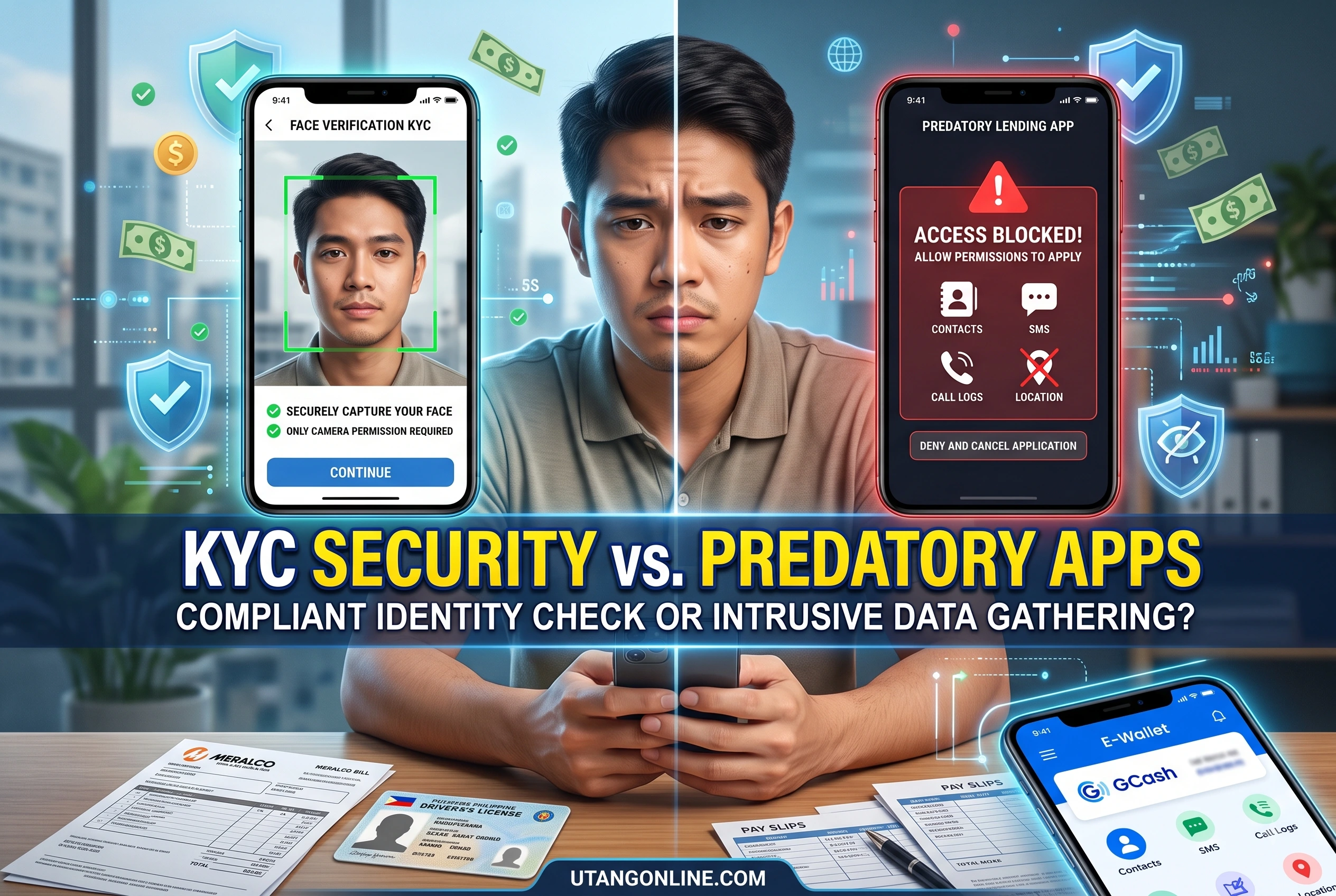
Legitimate data gathering only requires access to your camera for live ID scanning and selfies. Predatory harvesting aggressively locks the app interface until you grant full permission to your personal contact list and private photo gallery.
During our hands-on audits of regulated fintech platforms, we observe clear consent flows. For example, when you apply with a compliant platform, the app asks to open your camera only when you reach the ID upload step. It makes sense contextually.
Illegal operators use “forced permission” models. If you deny contact access, the app simply closes or refuses to let you click the “Apply” button. The National Privacy Commission (NPC) explicitly prohibits apps from requiring access to your entire contact list. If you see an app freezing you out because you won’t share your phonebook, delete it immediately.
How Can I Spot a “Ghost App” or “VIP Loan Scam” Before Installing?
You can spot ghost apps by checking for generic developer names, missing company websites, and a flood of fake 5-star reviews on the Google Play Store. VIP loan scams typically ask for an upfront deposit before releasing your funds.
A major friction point we see in the current digital lending space is the rise of “Ghost Apps.” These applications appear on the app store on a Monday, aggressively advertise on social media, harvest thousands of users, and vanish by Friday. They often have randomized names like “CashFastVIP” or “PesoLightning.”
Another highly deceptive tactic is the VIP Loan Scam. When testing one such platform, our profile was instantly “approved” for a PHP 50,000 credit line. But to disburse the funds, the app required a PHP 2,000 “processing fee” sent via e-wallet. Real lenders deduct processing fees from the principal amount; they never ask you to send your own money first.
How Can I Actually Check if a Lending App is SEC-Registered?
To verify an app, visit the official SEC Philippines website and download the updated list of registered lending and financing companies. Search the document to ensure the app’s operating name and the corporation’s Certificate of Authority match exactly.
It is not enough to look at an app store description. Scammers frequently copy the registration details of legitimate financial institutions and paste them into their own app descriptions. I regularly advise borrowers that verifying sec registered online lending apps philippines requires leaving the app store and going straight to the source.
Navigate to the SEC website (sec.gov.ph) and look for the section dedicated to Lending and Financing Companies. The SEC updates these PDF lists regularly. You need to look for two specific lists: the registered companies and, equally important, the list of revoked or suspended apps.
Where Exactly Do I Find the SEC Certificate of Authority (CA) Number?
You will find the genuine Certificate of Authority (CA) number on the SEC’s official list of approved lenders, matched to the specific corporate entity. Compare this number with what the app displays in its privacy policy or terms and conditions.
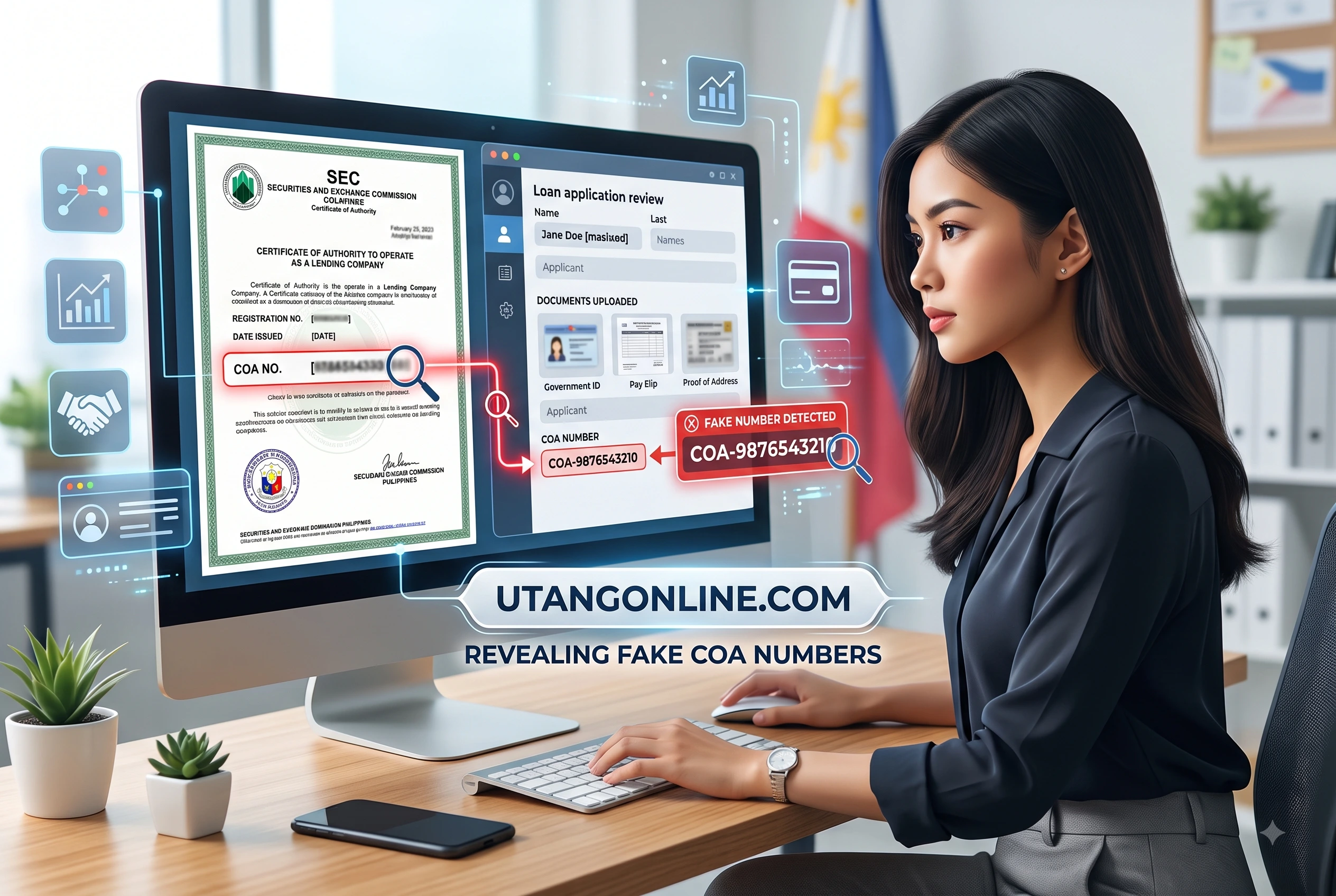
Every legal lending operation in the Philippines is required to secure a Certificate of Authority (CA) to Operate as a Lending or Financing Company. When you open the SEC’s PDF list, you will see a table with the corporate name, the registered app names (doing business as), and the CA number.
During our compliance checks, we always verify the exact spelling. Scammers will slightly misspell a registered corporate name. For example, if the real company is “LendingTech Corp,” the fake app might register under a generic developer account but claim to be “Lending Tech Corp.” in the bio.
What Should I Do if the App’s Name Matches the SEC List But Feels Suspicious?
If an app matches the SEC list but exhibits predatory behaviors like demanding upfront fees or contact access, it is likely a clone app. Do not submit your ID, and contact the official company directly through their verified website to confirm the app’s legitimacy.
Clone apps are incredibly sophisticated. We encountered a situation where a borrower downloaded an app bearing the exact logo, name, and CA number of a well-known registered financing company. However, the UI felt clunky, and the app demanded access to the photo gallery.
When we investigated, we realized the borrower had downloaded the app from a link sent via an unsolicited text message, not from the official Google Play Store. The scammers had built an identical-looking fake app. If you ever feel suspicious, look for the official company’s website and use the direct app store link provided there.
What Are My Rights Under the Data Privacy Act of 2012 When Borrowing?
The Data Privacy Act of 2012 gives you the right to consent, the right to access your data, and the right to object to unauthorized sharing. Lenders cannot legally process or share your personal information beyond what is necessary for loan assessment.
Many borrowers assume that by clicking “I Agree” on a Terms and Conditions page, they sign away their human rights. This is legally false. A contract cannot override national law. The Data Privacy Act mandates that data collection must be proportional.
If you are dealing with a platform that threatens you, remember this: your consent to be evaluated for a loan does not equal consent to be harassed. Finding legit online lenders means finding companies that respect these boundaries. Reputable firms have designated Data Protection Officers (DPOs) and clear channels for you to request the deletion of your account once your obligations are settled.
Can Online Loans Really Access My Contacts and Shame Me Publicly?
While illegal apps have the technical capability to access your contacts if you grant permission, using that data to publicly shame you is a severe criminal violation of the Data Privacy Act and NPC circulars.
The technical reality is yes, if you tapped “Allow” on the permissions pop-up, the app likely scraped your contact list in seconds and stored it on an offshore server. However, the legal reality is that utilizing those contacts to collect a debt is strictly prohibited.
The NPC has repeatedly issued circulars banning the use of contact lists to shame borrowers. If a collector texts your employer or posts your face on social media calling you a thief, they are committing a crime. This is a tactic designed solely to break you psychologically.
How Can I Revoke Permissions if I Already Installed a Suspicious App?
To revoke permissions, go to your phone’s Settings, navigate to App Management, select the specific loan app, tap on Permissions, and manually turn off access to Contacts, Storage, Camera, and Phone.
If you realize you have installed a predatory app, take immediate defensive action. Do not simply delete the app from your home screen. When we guide distressed borrowers through data lockdown, we ensure they cut the feed first.
Go into your settings and toggle every permission to “Deny.” Once you have locked down the permissions, clear the app’s cache and data. Only then should you uninstall the application. While this will not retrieve data they have already scraped, it prevents them from pulling new contacts or updated photos if you take screenshots of their harassing messages.
Where and How Do I Report a Harassing Lending App in the Philippines?
You can report a harassing lending app to the Securities and Exchange Commission (SEC), the National Privacy Commission (NPC), and the Cybercrime Investigation and Coordinating Center (CICC) by submitting screenshots of the threats and the app details.
Knowing where to turn is your strongest defense. We advise borrowers to carefully document everything. Do not block the collector’s number immediately; instead, let them send the threats so you can screenshot them. Capture the phone numbers, the exact messages, and the timestamps.
Once you have your evidence, you can file a formal complaint. It is essential to act decisively to report lending harassment because these agencies rely on consumer reports to build cases for mass takedowns and cease-and-desist orders.
When Should I Contact the National Privacy Commission (NPC)?
You should contact the NPC immediately if an app texts people in your contact list, posts your ID on social media, or misuses your personal information to extort payments.
The NPC handles the specific crime of data misuse. When you file a complaint via the NPC’s official portal, they will ask for proof that your data was used outside the scope of your loan agreement. Screenshots of a collector messaging your sister or threatening to post your selfie online are exact grounds for an NPC investigation.
How Do I File a Complaint with the Cybercrime Investigation and Coordinating Center (CICC)?
To file with the CICC, visit their official website or call their 1326 hotline, and provide your compiled screenshots, the app’s APK or download link, and records of the harassment to their cyber response team.
The CICC acts rapidly on cyber threats. Because many of these illegal operators use unregistered SIM cards and offshore servers, the CICC has the technical infrastructure to trace these syndicates. When our team assists in reporting ghost apps, the CICC hotline is often the most responsive first step for immediate cyber intervention, especially if you are receiving death threats.
Making Safe Financial Decisions
Checking for a valid SEC registration is not just a regulatory checkbox; it is the line between a manageable financial decision and a potential digital nightmare. Always prioritize your data privacy over the promise of quick cash. If an application forces you to compromise your contact list, walk away. Legitimate operators assess your ability to pay; predatory operators assess your capacity to be shamed. Stay vigilant, verify directly with government lists, and protect your digital footprint.
References
- Securities and Exchange CommissionOrganization: SEC PhilippinesResource: List of Registered Lending and Financing CompaniesURL: https://www.sec.gov.ph/lending-companies-and-financing-companies-2/list-of-lending-companies-and-financing-companies/
- National Privacy CommissionOrganization: NPC PhilippinesResource: Guidelines on the Processing of Personal Data for Loan-Related TransactionsURL: https://privacy.gov.ph/advisories/npc-circular-no-20-01-guidelines-on-the-processing-of-personal-data-for-loan-related-transactions/
- Cybercrime Investigation and Coordinating CenterOrganization: CICCResource: Inter-Agency Response to Cyber Scams and Online FraudURL: https://cicc.gov.ph/report/
Last Updated on August 15, 2026 by Michael Reyes
