
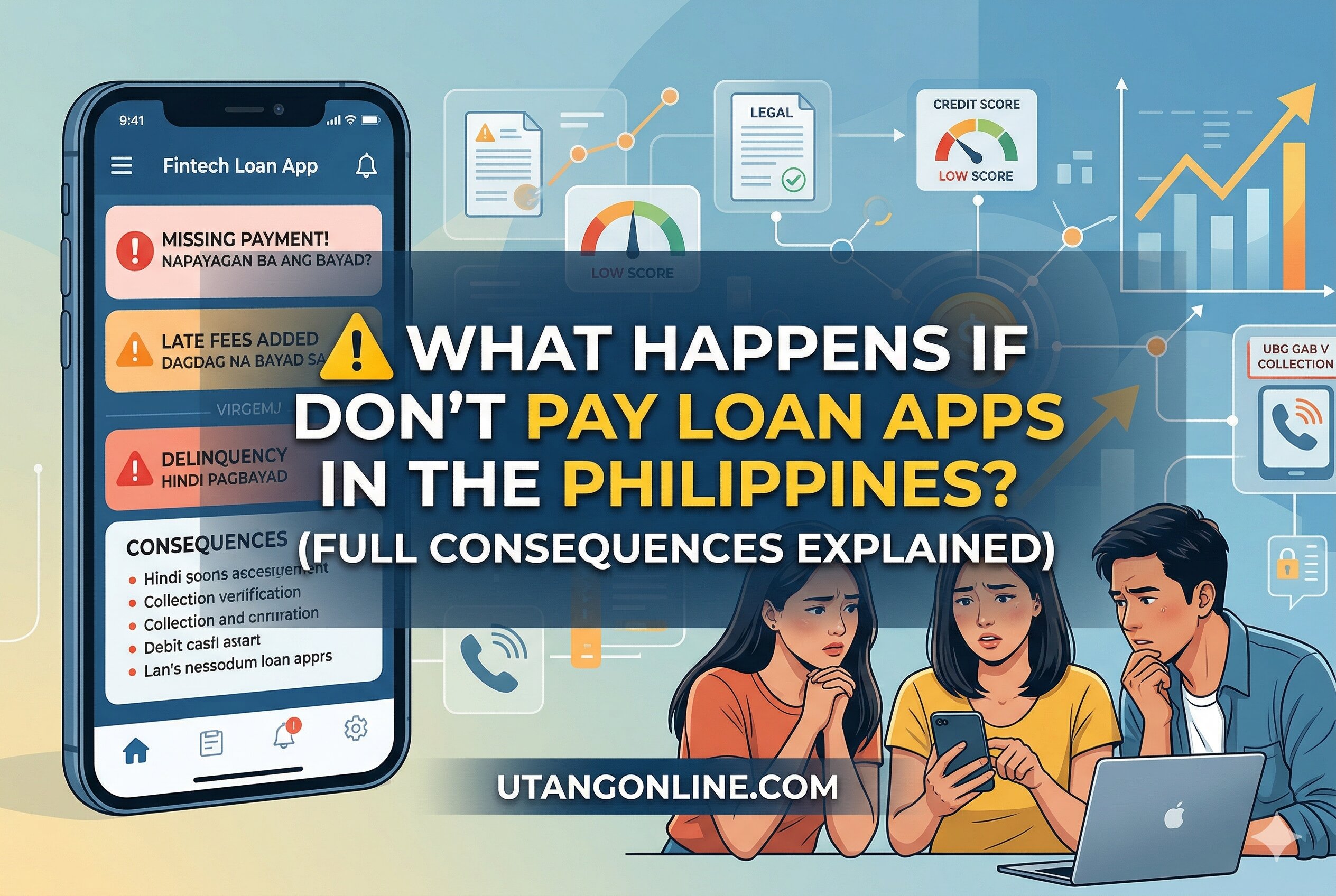
Missing payments on a loan app in the Philippines can feel overwhelming-especially when messages, calls, and penalties start piling up. If you’re worried about what happens next, this article breaks down the real consequences, legal risks, and practical solutions in a clear, no-nonsense way.
This is not about choosing the best loan apps philippines-it’s about what happens after you’ve already borrowed and can’t keep up.
Quick Answer: What Happens If You Don’t Pay a Loan App?
If you fail to pay a loan app in the Philippines, here’s what typically happens:
- You incur late payment penalties and interest
- Your account is endorsed to debt collectors
- You receive frequent calls, texts, and reminders
- Your credit profile is negatively affected
- You may face legal threats or small claims cases
- Your personal contacts may be contacted (in abusive cases)
👉 Important: You will NOT go to jail for unpaid loan app debt-but the financial and emotional consequences can still be serious.
How Loan Apps Operate After a Missed Payment
Loan apps-especially digital lenders-use automated systems to track repayments. The moment you miss a due date, the process begins.
Stage 1: Immediate Penalties
Within 24-72 hours after your due date:
- Late fees are added (daily or one-time)
- Interest continues to accumulate
- Your loan balance increases quickly
💡 Some apps advertise themselves as low interest loan apps, but penalties can still make the total cost much higher if you default.
Stage 2: Collection Efforts Begin
After a few days:
- You receive SMS, email, and app notifications
- Calls from internal collection teams start
- You may be offered restructuring or extensions
Stage 3: Account Endorsed to Debt Collectors
If unpaid for weeks:
- Your account is transferred to third-party debt collectors
- Collection tactics become more aggressive
- You may receive daily calls from different numbers
These collectors are legally allowed to remind you-but harassment, threats, or public shaming are NOT legal.
The Real Financial Consequences 💸
Let’s break down what defaulting actually costs you.
1. Accumulating Penalties
Loan apps often charge:
- Daily interest (1%-3%)
- Late payment fees
- Processing or extension fees
📊 Example scenario:
- Loan amount: ₱5,000
- Daily penalty: 2%
- After 30 days unpaid → Total can exceed ₱8,000+
2. Credit Damage (Formal & Informal)
While not all loan apps report to credit bureaus, many now integrate with systems under the Credit Information Corporation (CIC).
This means:
- Future loan applications may be rejected
- Banks and formal lenders may flag your profile
- Even legit loan apps philippines may deny you later
3. Limited Access to Future Loans
Defaulting on one app can spread across networks:
- Lenders share risk data internally
- You may be blacklisted from multiple platforms
- You’ll be forced to rely on riskier lenders
Legal Consequences: What the Law Actually Says ⚖️
This is where fear usually kicks in-so let’s clarify.
Can You Go to Jail for Not Paying a Loan App?
No. Under Philippine law:
- Unpaid debt is NOT a criminal offense
- You cannot be imprisoned for failure to pay a loan
This principle is rooted in the constitutional protection against imprisonment for debt.
When Can Legal Action Happen?
While you won’t go to jail, lenders can still pursue:
1. Small Claims Court
- Used for unpaid loans under a certain threshold
- Faster process (no lawyer required)
- Court may order you to repay
2. Civil Cases
- For larger debts or repeated defaults
- May result in wage garnishment or asset claims (rare for small app loans)
Illegal Practices You Should Know 🚫
Some abusive lenders or collectors may:
- Threaten arrest (false)
- Shame you publicly on social media
- Contact your phone contacts
These actions violate Philippine laws such as:
- Data Privacy Act
- Fair Debt Collection guidelines
👉 If this happens, you can report them to regulators.
Emotional Impact: Why Defaulting Feels So Stressful 😰
Beyond money, the psychological pressure can be intense:
- Constant calls and messages
- Fear of legal consequences
- Anxiety about reputation and family
This is why many borrowers panic-and sometimes make worse financial decisions.
Real-Life Scenarios: Cause → Effect → Outcome
Scenario 1: Short-Term Missed Payment
Cause: Forgot due date or lacked funds
Effect: Late fees + collection reminders
Outcome: Debt grows but still manageable if paid within 1-2 weeks
Scenario 2: Long-Term Default
Cause: Job loss or financial emergency
Effect: Account sent to collectors, frequent harassment
Outcome: Increased debt + damaged borrowing ability
Scenario 3: Ignoring Everything
Cause: Avoiding calls/messages
Effect: Escalation to legal threats or small claims
Outcome: Court order possible + long-term financial restrictions
What You Should Do If You Can’t Pay
Instead of ignoring the problem, take control early.
1. Communicate with the Lender
- Request extension or restructuring
- Some apps allow installment repayment
2. Prioritize Legitimate Lenders
Focus on paying licensed platforms first-especially those listed among legit loan apps philippines.
Why?
- They follow legal processes
- They’re more likely to report to credit systems
3. Avoid Taking New Loans to Pay Old Ones
This creates a debt cycle:
- Borrow → repay → borrow again → deeper debt
4. Negotiate Settlement
In some cases:
- You can negotiate partial payment
- Lenders may accept reduced lump sums
FAQs: What Filipinos Usually Ask
Will I go to jail if I don’t pay a loan app?
No. Debt is not a criminal offense in the Philippines. However, lenders can file civil cases.
Can loan apps contact my family or friends?
Only if you gave consent-but even then, harassment or public shaming is illegal.
Will my credit score be affected?
Yes, especially if the lender reports to credit bureaus or shares data within lending networks.
What happens if I ignore debt collectors?
The situation escalates:
- More aggressive collection efforts
- Possible legal action
- Higher total debt
Can I still borrow again after defaulting?
Yes-but options will be limited, and interest rates may be higher. It’s better to maintain good standing with low interest loan apps for long-term flexibility.
How to Avoid This Situation in the Future
The best solution is prevention.
Smart Borrowing Habits ✔️
- Borrow only what you can repay within your income cycle
- Always check total repayment amount-not just the principal
- Choose from trusted platforms like best loan apps philippines
- Avoid apps with unclear terms or aggressive tactics
Red Flags to Watch Out For 🚩
- No clear interest disclosure
- Extremely high daily rates
- Requests for excessive phone access
- Harassment during early repayment stages
Final Thoughts: Stay in Control, Not in Fear
Defaulting on a loan app is stressful-but it’s not the end of the road.
What matters is how you respond:
- Take action early
- Know your rights
- Avoid panic decisions
- Focus on rebuilding your financial stability
Loan apps can be helpful when used responsibly-but they can also become burdensome if mismanaged.
If you’re currently struggling, remember: you have options, protections, and a path forward.
Last Updated on March 28, 2026 by Michael Reyes
